Author: Gary W. Kelly

  • So You Want to Adopt a Siberian Husky?

    Interested in adopting a Siberian Husky? You have undoubtedly heard how marvelous they are: beautiful, intelligent, and iconic.

    However, before you sign the papers, we believe you should know the whole truth. They have specific “shortcomings” and may not make the ideal pet for everyone attracted to their striking looks.

    Here is an honest checklist to help you decide if you are ready for the challenge.

    1. The Need for Company

    Siberians are a gregarious lot. They are pack animals by nature and often need the company of other dogs or people at all times.

    If you work all day, or have room for only one dog, think twice before adopting a Siberian. They often suffer from separation anxiety, which can lead to destructive behavior if left alone for long periods.

    2. The “Guard Dog” Myth

    While capable of strong affection for his family, the Siberian Husky is also remarkably friendly with strangers. They will likely greet a burglar with the same enthusiasm they greet you.

    If you are looking for the fierce loyalty of a one-person watch-dog—DON’T ADOPT A SIBERIAN!

    3. The Shedding Situation

    At least once a year (often twice), Siberians “blow” their coats. This isn’t just a little hair; it is an avalanche of fur.

    If you value a spotless house and hate fur on your clothes, furniture, and in the very air you breathe, you will be miserable. But if you don’t mind vacuuming daily—fine. If not? DON’T ADOPT A SIBERIAN!

    4. Landscaping vs. Digging

    Some Siberian Huskies have a natural proclivity for digging holes in backyards. They dig to cool off, they dig to hide things, or they dig just for fun.

    If you take great pride in your pristine landscaping efforts and prize-winning flower beds—DON’T ADOPT A SIBERIAN!

    5. The Escape Artist

    Of all the challenges found in a Siberian, the most dangerous to the dog is their tremendous desire to RUN. The very first dash that a dog makes across the road could be his last.

    A Siberian must be kept confined or under control at all times. They cannot be trusted off-leash in unfenced areas.

    If you are one of those people who think it is cruel to keep a dog on a leash or behind a high fence, then—DON’T ADOPT A SIBERIAN!

    We believe that any dog is better off in a proper kennel or fenced yard than running loose. A roaming dog faces many dangers:

    • Traffic accidents
    • Fights with other animals
    • Disease and parasites
    • The danger of getting lost or stolen

    We don’t want to see any Siberian become a stray. If you want a dog who will never stray and stay on the porch contentedly while you are gone, this is not the breed for you.

    6. High Energy and Vocalization (Added Insight)

    Beyond the original warnings, prospective owners must know that Huskies are high-energy working dogs. They require vigorous daily exercise—not just a quick walk around the block. Without an outlet for their energy, they become destructive.

    Furthermore, they rarely bark, but they do “talk.” They howl, woo-woo, and groan. If you live in an apartment with thin walls or noise restrictions, this vocal nature can be a problem.

    The Verdict

    If you have read this far, honestly feel that you qualify on all counts, and are still determined to own a Siberian, then we take great pleasure in welcoming you to the fold.

    Join the rest of us in the smug complacency of knowing that we own the most beautiful, the smartest, and the most nearly ideal dog in the world.

    It is hard to be humble when you own a Siberian Husky.

  • A Shopping List for the New Dog

    One day you went to the website ADRTC.ORG and found yourself fascinated by a picture of a certain dog. You may have visited this site many times before and enjoyed the pictures, but you were always able to leave with just a smile.

    But on this day, there was a picture of a special dog that you just could not put out of your mind. You finally gave in and visited the dog at the foster home. It was just a visit, because you were curious and maybe looking for a dog, if it was just the right one. Now that you know it is, and you are about to bring it home, you will want to know what you have done and what you are going to need at home to make this new dog a proper member of your family.

    Here is a beginning list that we hope will help. Please send us your comments and suggestions for changes and additions so others can benefit from your experiences.


    1. Feeding equipment

    We recommend stainless steel pans. Pans of 2 and 3 quarts work best with most of the breeds we place. Stainless steel is best because it is durable, dishwasher safe, and dogs cannot chew it.

    Aluminum is not recommended, as small amounts may be ingested by the dog and could negatively affect health. Aluminum has been implicated in neurological disorders, so we avoid using it when it is not necessary.

    We recommend two bowls, one for food and one for water. Additional water bowls may be required depending on your household setup.


    2. Food

    We recommend feeding your dog a natural dog food. There are many more options on the market now than in the past. Avoid grocery store foods, as they are rarely good nutrition for northern breeds. Quality foods can be purchased at feed stores, pet stores, or ordered online.

    There are many natural dog foods that work well. Some examples include products from Naturapet, Nutro Natural Choice, Solid Gold, Pinnacle, or Lundquist.

    Dry food is generally recommended, as it helps keep teeth cleaner. Some northern dogs can be finicky eaters, so this may occasionally be a challenge.

    We recommend avoiding frequent snacks and using treats only for training and reinforcement. Remember that feeding can stimulate bowel movements, which may complicate house training if treats are overused.


    3. Collar and leash

    Each dog from CCNDR comes with at least one collar. You should not need additional collars, but a leash is essential.

    A general rule to remember is that the longer the leash, the less control the handler has over the dog. Use a short leash for maximum control and continue using it until you are confident in your dog’s behavior in all situations. Short training tabs are also helpful. Long leashes should be used only for training purposes or later for controlled recreational use.


    4. Crate

    A good crate is an ideal way to start out happily with your new dog. Almost every dog from CCNDR is crate trained when placed. Many are also trained on tie down lines.

    A crate provides your dog with a private, secure space to sleep, eat, or play quietly with toys. If you have more than one dog, a crate is almost a necessity. Even with only one dog, a crate helps your dog feel safe and secure. Properly crate trained dogs view the crate as a place of security, not confinement.

    For an average size dog, such as a 50 pound Siberian, a size 400 crate is adequate. If a mesh crate is preferred, a small size works well. Mesh crates are often collapsible for storage. Plastic crates with solid walls are better for shipping or transporting dogs.


    5. Identification

    An identification tag with your name, address, and phone number is essential. Dogs from CCNDR wear an Alaskan collar and a CCNDR identification tag with a unique reference number.

    We recommend adding a personal tag with your name and contact information, but leaving off the dog’s name. Including the dog’s name may encourage theft and can make proving ownership more difficult if the dog has not yet been microchipped.

    We strongly recommend microchipping all dogs. Some of our dogs are chipped, but many are not due to cost limitations. We hope this will change in the future.


    6. Grooming tools

    For general use, a slicker brush works well for most northern breeds. Longer haired dogs such as Siberians, Samoyeds, Keeshonds, and some Malamutes may require a rake.

    A longer rake with closely spaced teeth is more effective than one with short or widely spaced prongs. Other helpful tools include a shedding blade, a rubber grooming brush such as a Zoom Groom, and a comb.


    7. Medications: flea, tick, and heartworm

    If fleas are a concern in your area, products such as Advantage or Frontline can be effective. If ticks are also a concern, Frontline is preferred, as it treats both fleas and ticks.

    We recommend establishing a regular application schedule, such as the first weekend of each month. Frontline may be applied every one to three months depending on the product and local conditions.

    Consult your veterinarian to determine whether heartworm prevention is necessary in your area. Some regions have very low incidence, while others have a high risk. Your dog’s activities also matter, such as hiking in areas where mosquitoes are prevalent. Heartworm preventatives require a veterinary prescription.


    8. Miscellaneous supplies: Nature’s Miracle and Bitter Apple

    While many CCNDR dogs are mature and trained, some are puppies or adolescents who may chew.

    For dogs inclined to chew inappropriate items, Bitter Apple can be sprayed on furniture legs or other objects to discourage chewing.

    Nature’s Miracle is useful for all dog owners. Even well trained dogs can have accidents or become ill indoors. After cleaning with standard carpet cleaners, applying Nature’s Miracle helps break down organic residue and eliminate odors over time. It is also effective for use in vehicles.


    9. Bedding

    Bedding should be kept simple. We recommend using the crate for sleeping, though this is not required for fully house trained dogs.

    Bath towels work well as bedding and are easy to wash and reuse. Rugs, carpets, and dog beds are harder to keep clean. Dog beds are best reserved for dogs that have passed the chewing stage, as younger dogs may destroy them.

    Old towels are perfectly suitable, and friends or family often have extras they are willing to donate.


    10. Toys

    Toys are important, but we recommend avoiding rawhide. Northern dogs may consume large amounts, which can irritate the digestive tract and cause prolonged gastrointestinal upset.

    Squeaker toys can be engaging but should be supervised, as dogs may remove and swallow the squeaker. Nylon or vegetable based chew toys work for some dogs, and rope toys are popular with young dogs.

    Cured cow hooves work well for many northern breeds when sourced from reputable suppliers. While no chew is completely risk free, providing an appropriate outlet for chewing is far better than allowing dogs to damage furniture, fencing, or landscaping. Some dogs have even been known to chew rocks, which is dangerous and costly.


    11. Yard inspection

    Inspect the area of the yard your dog will use, especially if the dog will be unattended. Remove toxic plants and check fencing, gates, garden tools, sprinkler heads, and ground lighting.

    Northern dogs can escape through very small gaps. An opening as small as 4 inches can allow a 50 pound dog to squeeze through.

    Digging is common among northern breeds. Fence lines should be designed to prevent digging underneath. Preventative measures are far easier than correcting escape behavior after it begins.


    Summary Shopping List

    1. Two stainless steel pans
    2. All natural dog food
    3. One leash and optional training tabs
    4. One crate, size 400 for a 50 pound dog or equivalent mesh size
    5. ID tag with owner contact information
    6. Grooming tools: slicker brush, rake, and optional rubber brush
    7. Medications for flea, tick, and heartworm prevention
    8. Nature’s Miracle and Bitter Apple
    9. Old or inexpensive towels
    10. Toys appropriate for your dog, avoiding rawhide
  • Arctic Dogs and Dog Parks

    What Northern Breed Owners Need to Know

    Many owners of northern breed dogs consider taking their dog to a dog park but feel unsure whether it is the right choice. For those new to breeds such as the Siberian Husky or American Eskimo Dog, managing daily life can already feel challenging. Visiting a dog park requires more preparation than simply putting a leash on your dog.

    Dog parks can be excellent places for exercise and socialization when used correctly. Most problems at dog parks are caused by people rather than dogs. Proper preparation, education, and awareness make the experience safer and more enjoyable for everyone.


    Are Dog Parks Good for Arctic Breeds?

    Northern breed dogs are energetic, intelligent, and social by nature. Dog parks can provide valuable physical and mental stimulation, but only when owners understand dog behavior, park rules, and proper etiquette.

    An unprepared visit can quickly turn from a pleasant outing into a stressful or dangerous situation. Preparation is essential.


    Know the Dog Park Rules

    Before bringing your dog, visit the dog park alone. Read all posted rules carefully and make notes if needed. Dog parks function best when everyone understands and follows the rules.

    Common rule violations include:

    • Bringing underage children into the park
    • Bringing food or treats
    • Bringing toys and leaving them behind

    These actions increase the risk of conflict, injury, and accidents.


    Children and Dog Parks

    Rules prohibiting young children exist for the safety of both children and dogs. Children may move unpredictably, startle dogs, or step on them. A frightened dog may bite, and the consequences are almost always worse for the dog than for the child.

    Dog parks do not require dogs to be socialized to children. Instead, children are required to stay outside the park.


    Food and Treats Are Dangerous

    Food is one of the fastest ways to start a dog fight. Treats are food and should never be brought into the dog park.

    Training that requires treats should be done elsewhere. Offering food in the presence of multiple dogs can escalate into serious conflict within seconds.

    The same applies to food or drinks for people. Even coffee or beverages can attract dogs and disrupt their behavior.


    Toys Create Conflict

    Toys should not be brought into dog parks. Many dogs become possessive over toys, leading to fights when another dog grabs them.

    Abandoned toys are especially dangerous. Dogs may swallow broken pieces, leading to intestinal blockage or death. Picking up discarded toys and throwing them away is an important safety courtesy.


    Always Supervise Your Dog

    Pay attention to your dog at all times. Be aware of what it is doing and how it interacts with others. Distractions lead to missed warning signs and preventable incidents.


    Preparing Your Dog for the Dog Park

    Vaccinations and Health

    Your dog must be fully vaccinated before visiting a dog park. This includes core vaccines and Bordetella.

    Diseases such as parvovirus can remain in the environment for months. Puppies or incompletely vaccinated dogs should never be taken to dog parks.

    If your dog shows any signs of illness, do not bring it to the park. A weakened immune system increases risk, and sick dogs can spread disease to others.


    Intact Dogs and Special Precautions

    Female dogs must not be in heat or approaching heat. Females can attract males weeks before visible signs appear, leading to fights and loss of control.

    Owners of intact males must ensure excellent control and prior training in multiple environments. Intact males may react more strongly to other males or females nearing heat.


    Identification and Equipment

    Your dog should:

    • Wear proper identification and license tags
    • Be microchipped
    • Have a well fitted collar
    • Be attached to a reliable leash

    Check leash clips and collars regularly. Worn equipment can fail at critical moments.


    Parasite Prevention

    Dogs should be on flea, tick, and heartworm prevention appropriate to your region. Some heartworm preventatives also protect against intestinal parasites commonly found at dog parks.


    Know Your Dog First

    Spend time walking your dog in your neighborhood before visiting a dog park. Observe how it reacts to other dogs, people, and distractions.

    Northern breeds are independent thinkers. Reliability matters more than perfect obedience. Knowing how your dog reacts allows you to manage situations calmly and effectively.


    Entering the Dog Park Safely

    For first visits, choose a quiet time. Walk around the park before entering to help your dog settle.

    Use the double gate system correctly:

    1. Enter the first gate
    2. Ensure no one is entering or exiting
    3. Remove the leash inside the holding area
    4. Enter the park calmly

    Hold your dog by the collar when opening the inner gate to prevent bolting.


    Using a Drag Line

    For dogs that do not come when called, a drag line can be helpful. A drag line is a lightweight line attached to the collar that trails behind the dog.

    Stepping on the line allows you to regain control calmly without chasing or yelling. This method is quiet, effective, and avoids embarrassment.


    Leash Etiquette Inside the Park

    Walking a dog on leash inside the dog park is poor etiquette and often dangerous. Leashed dogs feel restricted and insecure, which can provoke aggressive reactions from off leash dogs.

    Dogs behave more naturally and calmly when off leash among other dogs.


    If a Fight Occurs

    Never place your hands or body between fighting dogs.

    Use the wheelbarrow technique:

    • Each owner grabs their dog by the hind legs
    • Lift and pull backward simultaneously

    This safely breaks most fights without injury.

    Stay calm and communicate clearly. Teaching others this method helps prevent injuries.


    Understanding Dog Behavior

    Spend time observing dogs at the park, even without your own dog present. Learn to recognize play, insecurity, warning signals, and true aggression.

    Growling, barking, and mock threats are often part of normal dog play. Learn when to monitor and when to intervene.


    Handling Problem Owners and Dogs

    Some owners misinterpret normal dog behavior or allow their dogs to behave poorly. Stay calm, polite, and firm when educating others.

    If a situation becomes consistently unsafe, change your visit time. Safety comes before routine.


    Watching Your Own Dog

    Ensure your dog does not:

    • Jump on people
    • Mouth hands or clothing
    • Harass other dogs

    Correct inappropriate behavior promptly. Ask others to help reinforce good manners when needed.


    Leaving the Dog Park

    Walk to your dog instead of calling from afar. Leash your dog calmly and exit carefully through both gates, watching for other dogs attempting to escape.


    What Dog Parks Teach Your Dog

    Dog parks provide valuable learning experiences:

    • Proper bite inhibition
    • Social boundaries
    • Appropriate play behavior
    • Improved confidence and emotional maturity

    Mental stimulation at the park often tires dogs more effectively than physical exercise alone.


    Final Thoughts

    Dog parks can be rewarding experiences for arctic breed dogs and their owners when approached responsibly. Preparation, awareness, and respect for rules protect everyone involved.

    A well managed dog park visit creates a calmer, happier, and better socialized dog.

  • Obese Dogs

    Understanding the Risks, Causes, and Safe Weight Loss

    Obesity in dogs has become one of the most common and dangerous health problems seen today. Rescue organizations regularly encounter dogs that are significantly overweight, many of whom should never have been allowed to reach such an unhealthy condition. Excess weight reduces quality of life, shortens lifespan, and increases the risk of serious disease.


    What Is Canine Obesity?

    Obesity is defined as the excessive accumulation of fat in the body that leads to impaired health and physical function. This is different from being simply overweight.

    A dog may exceed a breed weight range due to muscle development rather than fat. Obesity specifically refers to excess body fat that causes or contributes to medical problems.

    A dog is considered obese when its body weight exceeds its ideal weight by 15 percent or more.


    How Common Is Obesity in Dogs?

    Canine obesity is currently the most widespread nutritional disorder affecting dogs worldwide. Estimates suggest that between 25 percent and 44 percent of dogs are obese.

    Obesity occurs more often:

    • In middle aged and older dogs
    • In females
    • In neutered dogs

    How to Tell If Your Dog Is Obese

    The simplest and most practical method is a hands on evaluation of your dog’s rib cage.

    • If ribs are easily felt with minimal fat covering, the dog is a healthy weight
    • If ribs are difficult to feel due to a layer of fat, the dog is overweight
    • If ribs cannot be felt at all, the dog is obese

    A large abdomen that hangs downward or bulges outward is another strong indicator of obesity.

    Any assessment should be confirmed by a veterinarian, who can rule out medical conditions that may mimic weight gain.


    Why Dogs Become Obese

    Some contributing factors are outside the owner’s control:

    • Genetics and breed type
    • Age
    • Sex
    • Neutering status

    However, the most important causes are owner controlled.

    Primary Causes

    • Excess calorie intake
    • Insufficient physical activity

    Most obesity results from dogs consuming more calories than they burn.

    Common contributors include:

    • Overfeeding
    • Table scraps and snacks
    • Treats given too frequently
    • Feeding when bored rather than hungry
    • Reduced exercise without reducing food intake

    Neutering significantly increases the likelihood of obesity if feeding habits are not adjusted.


    Puppy Overfeeding and Lifelong Impact

    Overfeeding puppies increases the number of fat cells in their bodies. Puppies allowed to become obese are far more likely to struggle with weight for the rest of their lives. Early feeding habits matter.


    Health Risks of Obesity

    Obesity significantly reduces a dog’s lifespan and enjoyment of life. It also increases veterinary costs and chronic illness.

    Health problems linked to obesity include:

    • Diabetes
    • Arthritis and joint disease
    • Reduced mobility
    • Decreased stamina
    • Lower overall quality of life

    A dog that remains obese for several years is very likely to develop medical complications.


    Owner Responsibility and Compliance

    Successful weight loss depends primarily on owner commitment. Every member of the household must agree on the necessity of the diet plan and follow it consistently.

    Common obstacles include:

    • Denial that the dog is overweight
    • Viewing excess weight as a sign of good health
    • Inconsistent feeding by different family members

    Weight management requires honesty, discipline, and consistency.


    Home Management for Weight Loss

    Calorie Restriction

    Reducing daily calorie intake is the foundation of weight loss. Most programs prescribe 40 to 60 percent of the calories required at the dog’s target weight.

    This can be achieved through:

    • Veterinary weight loss diets
    • Carefully planned home prepared diets

    Food changes must be complete to be effective.


    Measuring Food Is Critical

    Food must always be measured accurately.

    Estimating portions or using unmeasured scoops almost always leads to overfeeding. Measuring every meal is essential for success.

    Stop the diet and consult your veterinarian if your dog develops loose stools or other digestive issues.


    Feeding Frequency

    Feeding smaller portions multiple times per day helps reduce hunger and improves compliance.

    • Ideally feed 3 to 4 times daily
    • At minimum feed twice daily

    The total daily food amount must not increase regardless of feeding frequency.


    Safe Weight Loss Rates

    • Small to medium dogs can safely lose about 1 pound per week
    • Large dogs can safely lose about 1.5 pounds per week

    Weight should be tracked regularly to ensure steady progress.


    Managing Extreme Hunger

    For dogs that exhibit severe hunger behaviors such as constant scavenging or stealing food, a high fiber approach may help.

    One effective rescue method involves replacing up to one third of the meal with rabbit food pellets. Rabbit food is high in fiber and very low in calories.

    Benefits include:

    • Increased satiety
    • Reduced hunger behaviors
    • No harmful effects when used appropriately

    Some dogs may need time to adjust to the taste.


    Chewing as a Behavioral Tool

    Providing large chew bones can help reduce food obsession by:

    • Occupying the dog for extended periods
    • Burning more calories than they consume
    • Reducing boredom driven behaviors

    This approach is particularly useful in chronic cases.


    Prevention Through Education

    Preventing obesity is easier than treating it. All dog owners should be educated on proper feeding practices, not only those with overweight dogs.

    A healthy dog today can easily become obese tomorrow if feeding habits are poor.


    Final Thoughts

    Obesity is a preventable condition that causes unnecessary suffering. With proper education, accurate feeding, consistent exercise, and veterinary guidance, dogs can live longer, healthier, and happier lives.

    Responsible feeding is an essential part of responsible dog ownership.

  • Tahviโ€™s Story

    Tahvi’s Story – The Training of a Guide Dog
    by Gary Wynn Kelly Copyright© 1996, 2005

    The remarkable Tahvi was born February 21, 1992. This article chronicles his early years up to 1996. The story was published with permission in the BASH newsletter from April through October, 1996. I have added an afterward, to summarize some of the highpoints that followed these early years. Tahvi died on January 21, 2004.


    Gary Wynn Kelly – May, 2005

    Why a Siberian?

    Typically, traditional guide dog schools use shepherds, retrievers, and border collies as guide dogs. When I obtained my first guide dog, I went to one of the highly respected schools, and got a shepherd guide dog named Nell. She was quite attractive and weighed in at 60 lbs. Nell worked as well as any shepherd, and served me for eight years. I retired her with hip dysplasia, cataracts, skin problems, low thyroid, digestive ailments, and occasional other maladies from time to time!

    I enjoyed the help that Nell gave for much of her life, but not the problems that came with her breed. The physical problems were obviously pronounced, and created their own psychological reactions to working well. After having concluded such an experience I was reluctant to again volunteer for a shepherd. She was a best bred shepherd, as she was a product of the school’s own breeding program.

    I conducted my own research on possible dogs for a guide dog. I was attracted by the husky. These dogs enjoy robust health, an enthusiastic nature, and the kind of intelligence essential to being a great guide dog. Some had been guide dogs, though not many. I decided to make the attempt.

    I liked the size of a husky. Traditionally, larger dogs were used on the misapprehension that a large dog was needed to move a large man out of the way of a vehicle or other danger if necessary. It seemed that a husky could manage this quite readily, and retain the benefits of a small dog. There is simply no place in modern society for an 80 pound dog in compact cars, airplanes, or at theaters.

    I also liked the odor-free nature of huskies. A wet shepherd is unpleasant to have on a bus, in the office, or even in the home. A less doggie smelling dog seemed an asset.

    A shepherd can be moody at the best of times, and positively unpleasant if one decides to take offense at being corrected, or is having an off day because it is hot outside. I wanted a dog with a positive outlook — a real optimist, who would do something for my occasional depressions other than reinforce them! It seemed there could be only one dog to meet all those requirements.

    I trained my first husky, Kodiak, and I was very fortunate in many respects. Kodiak, as he matured, became a dignified professional dog who fulfilled my every expectation of what a truly great guide dog should be. After that, I was sold on huskies!

    When I lived in Hawaii, I did not use a guide dog. This is due to the fact that quarantine regulations are so severe as to make travel with a guide dog almost impossible. The quarantine period at that time, was 4 months, and there was no exemption for guide dogs.

    Huskies make great guide dogs because they love working, take work seriously, enjoy having new experiences, always have a positive attitude, enjoy people and children, and never take things personally. We should all have such great companions and working partners!

    When we moved to California in 1992, I again chose to train my own husky. There seemed little choice for me after my experiences with Kodiak, and my general good feelings about the breed. I contacted Lee Reed, of Aurora Siberians, and after viewing with him, I acquired Tahvi — or Tahvi me.

    Training Can Be Difficult

    I started Tahvi’s training in September of 1992. I began by taking Tahvi on walks around my neighbor hood on leash. I used my cane, and just had Tahvi come along. At every street corner, I would make him sit, praise him, and have him wait until it was safe to cross. We did this each day, gradually getting Tahvi used to being out near traffic, and aware of curbs. After a couple of weeks, we introduced him to his harness, which he, like Kodiak, instantly loved — very unlike shepherds, who will eat their harness, or chew it off.

    The next days were spent in continuing the original exercise with encouragement for Tahvi to guide. He had learned the limited route, so he would tentatively set out along it. With encouragement, he learned to walk along and stop at corners. It took time to teach him to actually stop reliably, and to not sniff along the way, but he did learn quite quickly.

    After only 3 weeks, I put all my work to the test, and took Tahvi out to dinner with us to a very nice restaurant. He settled down behind my chair near a window, and behaved very well. That set a pattern for going out that persisted for all his working years.

    I had practiced having Tahvi at my feet at the home dinner table, and I never feed my dogs from the table, so I was quite sure of his manners in advance. It is also important to plan for future events.

    One school of thought might think that taking a young dog out so early in training was foolishness. Actually, it isn’t. The dogs are inexperienced, and a husky will react predictably in this situation. They are reserved, because they are uncertain. It is overwhelming, and demanding, so they typically respond by being a lot less enthusiastic and boisterous. I reinforced that, and it became the pattern.

    As Tahvi progressed in learning to guide, I began “rewarding” him by expanding the route on which we trained. Huskies love change. They often quickly grow bored with the same routine which gives them an unjustified reputation as stubborn. Huskies thrive on stimulation and interaction. They will create what they don’t have, through games and varying the instructions they are given.

    As I expanded the route, there were plenty of opportunities to make demands on even an energetic husky. A guide dog cannot simply obey commands. A good guide dog has to intelligently disobey commands, and use a lot of initiative in solving unstructured problems. I make more demands on my dogs than traditional training, because there is a lot I don’t know about what might be happening that a sighted trainer would know. My dogs have to think early, and think accurately.

    It is not desirable to over-stress the obedience of a guide dog. The last thing a guide dog should be is perfectly obedient. They are generally selected to be “intelligently disobedient”, and show high initiative. That is a bit of a paradox to obedient behavior.

    I began Tahvi’s training with very little obedience. Virtually all teaching was with positive reinforcement only. As months went by, I demanded a higher standard of excellence reinforced with verbal praise, and verbal discipline for the most part. Occasionally — and rarely for the training of Tahvi — I used a leash correction. I reserved this for severe offenses, since verbal guidance is all that he normally required. Tahvi is a “soft” dog, and a leash correction was much too harsh for him in most instances. He takes my verbal displeasure seriously, and tries to please me.

    I was surprised to find that when I began his obedience training that he had no objection. When Tahvi was young, he would get up in the morning, and begin his day like a cannon ball. He was awake, full of energy, and ready for his walk. It was hard to get him to eat breakfast first. As a matter of fact he would get so excited, that I had to slow him down, or the excitement led to further spirals of uncontrolled enthusiasm. So, I began obedience training before taking him on a walk. Much to my surprise, he took to it with typical husky enthusiasm. He bugled when he performed successfully, and when he failed to sit calmly and rest as he should, he would jump around excitedly demanding just “one more chance!” I had a hard time being serious enough to keep him concentrating on his exercises.

    Tahvi learned all the commands, and could perform each perfectly — when he could restrain himself enough to comply. He learned that when he did complete them successfully, we went for his walk. So at the end of the session I was often rewarded with a trumpeting husky’s declaration of success.

    Initiative is very important in guide dogs, and counter to obedience. Guide dog instructors like to talk about the criteria for guide dogs being initiative, emotional stability, and intelligent disobedience. Guide dogs are not very well trained for obedience because it is counter to the first and third qualities most sought for in selecting guide dogs.

    Initiative is required for the dog to problem solve. Too many situations contain variables and circumstances of which I can know nothing. My dog has to make the decision to do something, or we are stuck. That can be dangerous. The dog has to take the initiative and solve the problem appropriately.

    As an example (that is all too typical) I can site the case of crossing a street that has multiple lanes, and having an inconsiderate driver pull into the crosswalk blocking it. If we stand still, the light may change leaving us in the middle of a street with cars going everywhere around us. Playing Russian roulette with automobiles is not my idea of entertainment. I want to have my dog figure a way out — now.

    The solution is not one I can dictate. Walking in front of the car may be unsafe if it takes us into the traffic lane, especially with cars coming up from behind us. Walking behind the car may be unsafe as well in that it may put us between two cars , with the possibility that the driver in front may decide to back up for some unknown reason, and not realize we are behind him.

    The dog had better think quickly — and well ahead of the problem. The key is to not have the situation develop if it can be helped. That means that Tahvi has to have figured out the problem before leaving the safety of the curb or island from which we start. It is possible, and has happened, that the situation developed after that was no longer a reality. Tahvi solves this by being conservatively assertive. He walks in front of the first car — right up to the offending driver’s side and stares the driver down. Several times they have backed up to let us pass with apologies.

    On the occasions when this has not occurred Tahvi is quite sure that the car we are now standing in front of is not going to move. He has placed himself in a position to be visible to the next driver behind the offending motorist, and when the inconsiderate driver has removed himself/herself — the next car usually stops to allow us safe passage to the curb. This happened several times at Park and Soquel. Tahvi was good — very good, in fact the best at this of any of the guide dogs I have ever had.

    Intelligent disobedience is knowing when to tell the master “no”. If I ordered Tahvi forward, and he realized that some driver was ready to make a right turn on red regardless of us having the right of way, he had best stand still. He would. He had a strong sense of self preservation.

    How does one encourage initiative? It can be suppressed, and I find encouraged with appropriate education. I did it through a careful program requiring months of work. When Tahvi guided me we encountered many situations which are trivial as well as those which are major. I began by having him make choices in trivial situations. Which way around an obstacle do we go? Often there are two or three solutions, and I let him choose. In any situation there may be more than one answer, and the important fact was that of Tahvi recognizing alternate possibilities. If he made a choice differing from my own, I would let him make it if it truly makes no difference in terms of the outcome.

    This may extend to which approach we make when we come to an obstacle, which way we walk around the block, or whether we use a short cut or not. I often would stop, and say nothing. Tahvi would seem to think about it, and offer a tentative indication of what he expected us to do. I then directed him to continue. After a while he made choices more assertively. later, he became quite definite, though he learned to revise his thinking immediately, if I directed him to do so.

    When we approached low hanging tree branches on a sidewalk, Tahvi had to decide if we should go into the street to go around them, or if I could safely navigate by stooping beneath them. Sometimes I would duck beneath them, but complained verbally if I thought we could have gone around more easily. He learned to take me around in the street unless he decided that he did not have the visibility to do so. Then I had to duck beneath branches — bow to his greater knowledge, so to speak.

    Tahvi could soon make confident decisions about going around cars at a construction site, moving into a traffic lane when the sidewalk was blocked, and staying where he was until the situation changed and produced a better set of circumstances. It is one of the few times Tahvi displayed patience during those early years.

    There were a couple of situations where Tahvi gave others a look communicating his assessment of their behavior — at least in their perceptions. We came down the sidewalk one day to find that construction was blocking the next twenty feet of sidewalk. Worker’s were doing some concrete work, and had hoses, wheel barrows, shovels, frames, and other debris every where. The workers immediately called out for us to stop, and one began directing the others to move various objects out of the way, Tahvi stopped for a moment or two, then proceeded, with some interesting expression on his face for the one giving orders. The man said to me, “I guess I should just let him do his job.”

    Tahvi of course, navigated the obstacles quickly and safely. He made it look easy. I wish I could have seen Tahvi’s look. Anita often has said that Tahvi always communicated so clearly.

    Another day Tahvi was cruising along the sidewalk at a good 3.5 mph, and there were containers with bottles for the usual Wednesday collection. A man called out to us about the containers, and his voice trailed off as he watched Tahvi. Tahvi didn’t even slow down, he veered left out one driveway, and in the next with total grace and control. He had it all figured for thirty feet in advance, and knew what he was going to do. He uses every curb cut, and every driveway he can to make his job easier, as well as my walking.

    When a guide dog uses curbs, it must stop and await my direction to go forward. Tahvi learned to optimize his moving time by planning the most accessible route. Huskies like efficiency — Kodiak learned the use of these conveniences as well.

    Huskies Will Be Huskies

    High initiative means that a husky sense of humor is likely to get ample expression as well. I got a sample of this from Tahvi when training him to take me along the beach.

    Tahvi had a mischievous sense of humor. I often would take him for walks on the beach. I was careful to always use the same ramp from the access road down to the beach when I first took him. That is very important. When I went down to the beach alone with Tahvi, I could not determine for myself, how to get from the beach back up to the road. By teaching Tahvi the way I could rely on him to take me back the way I came.

    New Brighton Beach is nice because it is possible to walk along the beach for more than a mile to the next State park — Sea Cliff. Tahvi had to know when we were getting back though, and find the way back up to the road. He did so reliably every time. One part of the beach looked like another to me, so I needed Tahvi to find our way out of the park.

    Tahvi was not above walking me into the waves when we took such a walk. He loves the ocean. He would chase waves, dig for them, and always consider it a treat to be taken to the beach. When I did not wish to get wet, I had to walk further up the beach from the waves to avoid tempting Tahvi. When the tide was high on one occasion, I was actually walking along the berm which is about two to three feet above the level of the beach. We walked along the beach to the creek as usual, and were on our way back when Tahvi engaged in his fun.

    We were most of the way back to New Brighton walking parallel to the high waves along the top of the berm. Tahvi suddenly jumped forward and up — taking me with him — right off into space! The berm had ended and Tahvi, instead of signalling me by stopping as he should have, jumped out into space taking me along. He knew it was only a couple of feet to the soft sand of the beach — but I didn’t!

    I landed safely enough, on my feet as a matter of fact, but I did experience an adrenaline shock. I don’t know what other people would say, but I know Tahvi was laughing at me! Especially, as he was cavorting about, doing his “lamb dance”.

    Every Day Life With Tahvi

    I was often asked about how I trained Tahvi in everyday matters. What techniques did I use for more usual husky problems?

    One day Anita and I were working at the house on our computers intently. Tahvi was in his backyard being bored. He had been in and out several times, and was growing tired of our failure to entertain him. He finally went outside and stayed out. We kept working — paying little attention to how quiet he had grown. Anita finally took a break and looked out in the yard. She gasped in dismay. Tahvi had dug six holes in a row. Any one of these holes was large enough to hold him in it! He had nearly made a trench across the yard, and of course, scattered dirt everywhere. It was a mess.

    Anita went out and began cleaning up. She swept the lanai, and covered the holes with what dirt was still available. Our usual procedure to discourage digging was to bury his stool from the yard in his holes. This is very effective as a deterrent to further excavation in the same area. This time however, his massive excavations precluded this simple solution. I suggested we get out the black pepper to put in the holes. Anita did so, and presently came inside.

    In a little while she looked outside to see what Tahvi was doing. He was walking around the area of the holes looking like he might dig them out again. But, suddenly he began using his nose to push dirt from around the yard into the holes. It was the first time we had ever seen a dog use his nose as a bulldozer! He soon ran out of dirt, since it was so scattered. He began looking around for more, and seeing some on the bottom board of the fence used his nose to push it off, and over the holes as well. We nearly fell off of our chairs laughing.

    Tahvi really does not like pepper! It was the first time I ever saw a husky un-dig a hole!

    For a while I had a challenge with Tahvi eating his bed. I suppose it is his version of a Bed and Breakfast — a bed for breakfast. He kept eating his cedar mattress. I bought burlap sacks to contain its remains, and he would eat those as well. I put Bitter Apple on the bedding, and in a couple of days it would wear off, and he would commence his mastications once again.

    I finally found the solution. I bought another burlap sack, and used some lemon scented Dawn dish detergent on it. I rubbed it in over the entire surface and let it dry without rinsing it. I put that over his cedar mattress, and he did not chew it after that. The first couple of days he was not thrilled about sleeping on it, but then he slept on it every night.

    The Traveling Tahvi

    Huskies love adventure, and Tahvi was no exception. We took a trip to Atlanta when Tahvi was seven months into training. That was a real test of how well Tahvi was doing.

    Tahvi was a traveling dog. He flew like a pro both ways. On the flight from San Jose to Phoenix, he was only the slightest bit nervous, but settled down quickly. In phoenix, we had expected to have a break before the next flight, but did not. That meant that Tahvi had to go much longer with no stop for him. He managed very well, though the total time for him exceeded nine hours with no trees.

    When flying with a guide dog, the airlines are supposed to provide seating with sufficient room to accommodate the dog. This means that we request the bulkhead seats. The floor space is sufficient here to permit the dog to lie at one’s feet. It is nice if there is an empty seat as well, so that there is additional unoccupied floorspace, but this is not required by the law. On the flight going to Atlanta we had the good fortune to have the extra seat on both flights. On the way home this was not true on the last flight. Tahvi managed though. The dog never needs a seat, but floor area is growing to be more of a premium as planes get smaller and passengers more crowded.

    The flight to Atlanta from Phoenix was supposed to have been on a larger aircraft, but there were so few passengers that they put us all on a 737. This meant that Tahvi did not have as much room, but then he did not know the difference. This is a *very* good reason to have a husky! I value him being only 45 pounds, and highly compact.

    When we landed in Atlanta and went to baggage claim, Tahvi saw the doors outside and insisted we take him out first. We did, and he did not even wait to get to the first tree — he chose a lamp post instead!

    The Atlanta airport is so large, that the concourses are connected to the terminal areas by an underground system a mile long. In this underground transit corridor, There is a choice of walking, a people mover, or a train. We chose the train. This is an automatic computer controlled train. One has to move fast or a computer voice chastises one for being in the way of the doors. Tahvi managed as though he had always done it.

    Bad Vibrations

    I learned something about huskies in Atlanta that I have suspected for many years. This may be a new bit of information not well-known among husky owners.

    When I had my previous husky guide dog, Kodiak, I found out that he had an interesting phobia. In Atlanta there are very large shopping malls. There are in fact, quite a large number of them around the city. They were built at different times, and have differing styles. Several have upper floors designed as balconies overlooking open lower courtyards. Some of these are built solidly, and some are built with a more resilient architecture such that they vibrate when you walk on the upper floor. I had found out years ago that Kodiak would never walk near the edge of the balcony of one of these malls. Others he would, so it never seemed to relate to heights. I suspected that it was a vibration that he sensed that he equated to “bad ice”. I could never prove that this was more than an aberration of one dog — until now.

    Tahvi acted in precisely the same manner. He refused to go near the edge of the balcony, or upper floor in a mall where Kodiak had behaved in the same manner. In other malls he had no problem. I am completely convinced now that these huskies sense the “swaying” or bouncing of the upper level with people walking on it. The result is that they interpret this as dangerous and retreat to safer footing. Tahvi and Kodiak acted in precisely the same way. They put all four feet in front of them, and refuse to go further. Each walked close to the store fronts venturing only a minimum distance from the solid footing near the building. If I attempted to force them to further distances from the store fronts each rebelled in the same manner. Neither would even permit me to lead them by leash to the edge of the upper level. Each would lie down and hug the floor — refusing to move.

    In two other malls built differently, tahvi had no such reaction. In one of them that was around at the time, Kodiak lived, he too, never reacted either. It isn’t the height.

    What is curious about this is that neither dog had had any experience with ice. The behavior is apparently passed on genetically. Possibly Tanya told Tahvi when he was a puppy — but I doubt it.

    I know that many people have wondered how huskies know bad ice without taking a sled out upon it. Apparently the answer is that they are sensitive to vibrations — perhaps through their feet. These vibrations may be sensed in a similar manner to seismic vibrations, and tell the husky a similar story.

    Tahvi Goes Shopping

    Another funny happening was that in one mall we went into a store looking for a present for Anita’s daughter who was graduating from California State at Northridge the next month. We were with my sister, Diane, and her husband, Al. On the way out the door, Al politely stated, “I think your dog has picked up something.”

    Tahvi had nabbed a stuffed black cat with velcro feet on the way by a display. He was carrying it in his mouth out the door!

    The store staff were very good about it. They laughed, and asked Anita, “Since the dog picked it out, Isn’t he going to buy it for him?”

    I didn’t. My sister accuses me of being a modern blind Fagan from oliver.

    Later, that following Christmas, my sister and her husband sent Tahvi a present: the cat he had chosen. We kept it for him for years, and he always cared for it. We put up where he could not demolish it, and brought it down for visits at intervals.

    Going Out and Up

    Tahvi was very well behaved at restaurants we went to, and quite the center of much attention anywhere we went. He had learned to ride escalators, but I did not practice as much as I might have, as there were so few where we were living. When we were in Atlanta, he got more practice. He was unsure, but quickly got back into the routine. The trick is to keep him moving when going onto, or coming off, an escalator.

    Thirty years ago guide dog schools did not teach dogs to do escalators. We were told to use elevators or stairs. About twenty years ago most schools began teaching dogs to do escalators. I taught Tahvi. Tahvi caught on right away. He had a sense that the safest place for his feet was in the middle of a step, and knew when coming off to avoid the vanishing steps.

    Talking Siberians

    Tahvi was also very popular with my parents and sister. My parents admired his intelligence, and my sister liked the way he could talk. I found it easier to teach Tahvi to talk in only some places and not in others. Basically when working he is not to talk. When off duty at home, he can talk politely. That means that he may make unusual — not very loud sounds. It has worked. He is doing very well by this agreement. If he talks in public I generally know that he needs something like water, or to go outside. Like many huskies, he can talk quite well in other circumstances! It probably would have been impossible, and cruel to forbid talking, so I taught him to moderate his talking into acceptable communications. He pleased me greatly with his success at mastering this concept.

    Generalizing Concepts

    On the trip back, we flew to Phoenix first on a 757 (which meant more room for Tahvi), and changed planes. We had to go from one concourse to another, and this required using two People Movers. These slidewalks are similar to escalators, but a little different in use. Tahvi took to them quite well. He made the general association, and surprised me by knowing what to do when he came to the end — he sped up so he did not go over on his nose! Tahvi handled these movers as though he had been told how in advance.

    Again, there was no opportunity to have Tahvi go outside during transfer. That meant that he traveled some eight hours with no stops. He did it. He was quite thirsty upon reaching San Jose, and when we stopped to get something to eat, I got him a big bowl of water. He emptied it.

    Tahvi matured greatly with the experiences. He underwent that permanent change which occurs in guide dogs. This change is the realization within the dog that the master really does not see, and the dog’s acceptance of what that means as a personal responsibility. It as though such an experience enables the dog to take all the independent concepts, and generalize them into one body of knowing. It is the wisdom of the guide dog, and they start acting with greater authority in every day work.

    This did not mean that Tahvi never made a mistake again. It did mean that he would think in any new situation. He would make a visible effort to accommodate my inability to see in his guiding behavior. He would also on occasion take advantage of my not seeing for his own purposes! After all, he is a husky which might also be pronounced as “opportunist”.

    Tahvi became well educated. He learned to make good decisions, and took his work seriously. His behavior when I depended on him to guide in harness became radically different from his behavior out of harness. While in harness, he was the professional guide dog, and while out of harness, he could play the clown dog very well.

    It is All in the Gait

    I should mention the importance of good gait in a guide dog. I had had three guide dogs including Tahvi, at the time of his early training. The gait of the dog is enormously important. I happen to like huskies with a gliding gait. When I hold the harness handle the movements of the dog tell me not just the direction in which the dog is travelling, but also the nature of the terrain over which the dog is navigating. A dog with an irregular, clumsy gait would be giving me signals that are similar to those I might expect from a dog who is trying to tell me that the footing is broken, or uneven. When I had my Shepherd, Nell, this problem occurred as she aged.

    As Nell got older she developed hip dysplasia. The result is that her gait became uneven when climbing slight inclines, curbs, steps, or sometimes just uneven because it was a cold morning. On cold mornings in fact, I gave her Bufferin so that she could guide at all. The result was that it became difficult to tell the nature of the terrain versus her uneven gait.

    Ideally, the best guide dog has a gait which makes it seem that the harness is floating in air. That way any change in the orientation or movement of the harness handle is clearly a signal from the dog. These signals can communicate a great deal of information if they are not contaminated by extraneous movements.

    I rely on the signals that Tahvi sends to tell me about his judgments concerning the path ahead, his behavior (is he paying attention?), and how he feels. If Tahvi doesn’t feel well, or has trouble with a foot (perhaps because he hurt a paw), his gait shows it first.

    Guide dogs vary in their typical work habits and behaviors. Tahvi usually had a positive pull on the harness. He liked to “pull” slightly, even when he had settled down after the first mile or so. This was particularly true if we were working new territory or fun places like the beach, as opposed to the “old route”.

    Tahvi had an even gait in his younger years. He actually walked so quietly when he chose that I could not tell where he had gone to in the house. I put a “harmony ball” around his neck attached to his collar. This makes pleasant chimes in a very quiet manner when he moved. The result was that Tahvi learned to move so quietly that he did not even jingle it. I changed to multiple tags, and those jingled well enough most of the time for me to know what he was doing.

    Tahvi was challenged by the spring growth each year. So many of the trees grew so much each year, that their limbs would hang down at face and head level for me. Tahvi had the task of keeping me from walking into these. It is one of the hardest things to teach a guide dog. Tahvi did quite well with this. He learned to think carefully before approaching such a situation, and warned me by slowing, or stopping. If he stopped, I knew to reach up and move the branch aside, or to command Tahvi to find a way around it. If I directed him to go “forward” he would take action to avoid the obstacle which sometimes meant that I had to go into the street. If I directed him to go “straight” he would proceed, slowly, trying to leave clearance for my head to just brush by the leaves. If this was not possible he would wait until I either cleared the path or gave another command.

    Guide dogs are allowed to have branches or leaves brush me, but not hit me in the face or body. This is sometimes a judgment call, and takes time to learn. The standard may vary with the master. I am pretty tough, partly since I wear glasses, and I don’t want them scratched or knocked off of my face. I have enough vision to see obstacles to my right, but none at all on my left. Branches from the left are especially dangerous. Tahvi was more likely to make a mistake on a new route than a known route. This is typical of guide dogs.

    The ultimate challenge comes with any guide dog, when another dog is near as we approach overhanging branches. That has to be the toughest challenge for a husky pup. The dog has to actually put me first and forget (at least post pone) interest in the other dog. That is discipline! Tahvi was far above average in this regard, and got better as he matured.

    A Day at the Wharf

    On one occasion, we went to Monterey, and walked around Fisherman’s Wharf. Tahvi loved it. He kept trying to chase all the sea birds of course, and I am fairly tolerant of that behavior, I control it, but I prefer he maintain some interest in his environment. I am a firm believer that attempting to eliminate interest in the environment, produces a depressed dog. Tahvi was a dog long before he learned to be a guide dog, and I owed it to him to respect that.

    Tahvi met a monkey at the Wharf. A man with an organ and a monkey was there collecting money from all the passers by. We stopped and I took Tahvi quite close. Tahvi was fascinated, and interestingly enough, so was the monkey. The monkey kept trying to come closer to Tahvi, and this annoyed his master, since he was more interested in having his animal collect money for him. Tahvi stood politely, wagging his tail, and staring at the monkey. He did not say a thing, only watched.

    I moved him away after a few minutes so as not to provoke the man further. Tahvi left with his usual good humor, and no reluctance. Tahvi always believed that if we are going to a different place it can only be that something else is there for him — that might be even better! He never showed any displeasure at my changing direction or plans.

    On the observation deck overlooking the harbor, Tahvi stood on his hind legs to see over the rail just as any person might. From his level he could see nothing, since there was a boarded up portion of the fence from about four inches to 40 inches. Tahvi simply stood up, and poked his head over the boarded up portion just under the top rail. People started watching him more than the harbor! They are always surprised by his almost child like behavior.

    Interestingly enough, as Tahvi got older, he did not do this. He even was reluctant to go out on this part of the wharf, as he seemed to think it was too dangerous. I found the change interesting.

    These incidents and more, illustrate how a husky can mature in to a wonderful guide dog, and how they can learn to enjoy the job even with its restrictions because it does offer the kind of variety on which they thrive.

    The San Diego Zoo Trip

    In February of 1996, we enjoyed a long weekend in San Diego. It was one of great weather, good food, and fun times. We took Tahvi to the zoo there, and saw the zoo from an entirely different perspective. Tahvi is extremely interactive, and we expected to see him react to the animals. We did not expect to see the animals interact with him. One usually thinks of the animals as existing in their own caged world, largely choosing to be unaware of those people outside of their cages. This is simply not so. They were incredibly aware of Tahvi in most instances, and reacted to his presence in often very obvious ways. Our adventure began with our late flight out from San Jose. By the time we got to our hotel in San Diego, it was 10:30 p.m. I fed Tahvi, and we walked him afterwards. This made it 11:30 or so when we returned to the hotel, and we were hungry. There was nothing open, so we ordered a sandwich to be delivered. We got it at almost 1:00 a.m. That meant that we got to bed pretty late!

    I got up at 6:30 that morning, so we didn’t get a lot of sleep. We ate, and got ready to go to the zoo. We made the zoo at around 10:00 a.m.

    Upon admission, we found that we had to talk with security about taking a guide dog through the zoo. After some preliminary work, we were permitted to take Tahvi through the zoo, but with an escort, to be sure that the animals didn’t get frightened, and that Tahvi didn’t misbehave. The assigned escort was an extremely nice young man named Norman, and the actual tour was more like having a guided tour than a security escort.

    Norman was to observe Tahvi and the animals, and make determinations as to when we might go into some areas, and when we had to avoid them. Some areas were off limits, such as the aviary, where frightened birds might damage themselves on their cages upon seeing a predator. Norman was quite impressed with our husky guide dog, and very perceptive of his behavior.

    We were unable to move into the primate area because the monkeys reacted so strongly to Tahvi when he was still 25 yards away. They set up such a chorus upon seeing him, that it was advisable to not enter their area. We did get to move into the big cat area — at least a part of it. The cats, normally appearing to be oblivious of the crowds, often stood, moved to the fore parts of their cages, then followed along the inside of the cage until we passed by. This was an accomplishment, since normally guide dogs are not permitted in the area at all. The exception came about because the keeper for that area gave us permission to enter, and Tahvi behaved well. Tahvi walked on the opposite side of the sidewalk from the cages, and sometimes crowded against me. He never made a single noise, appearing to be aware that these were certainly not house cats! We avoided the snow leopard, since it was known to react to dogs, and we did pass its cage from a lower road. The snow leopards, two of them, could see us from 100 feet away, and one of them watched us take each step until we passed from view. The other was asleep, so we did not upset it. Anita said that it was the only time in her life where she felt the stare of a wild animal who didn’t want us near. Norman was pleased with the encounters. The visitors to the zoo at that time got a better view of the animals, since the cats normally sleep, and are hard to see clearly. They woke, and followed us, one even standing on its hind legs to watch us leave the area. The other visitors were quite entertained by the sight of such big cats watching a little husky who was probably more than a little concerned about becoming dinner for one!

    The supervisor for the cat area was impressed and pleased. The results were so favorable, that other guide dogs might be permitted in this area in future. Tahvi apparently, was one of the first.

    The escort stated he would be able to give the handlers some excellent information as a result of our visit. Animals that he expected to react reacted mildly, or in a very acceptable way — as with the big cats, and others, like the deer, reacted strongly, even barking at Tahvi until we moved from their area completely.

    The deer were quite funny! There were six of them in one very large enclosure. Tahvi was looking in at them, and the females lined up in a row, and began moving towards him, staring intently. Norman decided it was time to move on at that point. As we did so, the male stood, and joined with the females. They moved after us, and began a sharp barking. The barks are single, explosively loud sounds that hit like the impact of a drumbeat. They are designed to frighten, and could easily do so. They kept this up until we were quite a long distance away. One interesting development was that when we first took Tahvi to a caged area, he would, with encouragement, put his forepaws on the top of the low wall around the area, and look inside. He often could not spot the animal, which might be hiding, and only partially visible. If the animal didn’t move, Tahvi became bored, and jumped down. After a couple of hours, he would spend minutes looking, and learned to keep looking, and using his senses until he did find the animal inside of the cage. We, as humans, can converse and say, “Look at…” Tahvi has no such advantage. To him, each cage was just another wall with vegetation behind it unless the animal was clearly moving, or choosing to make itself known. He would even get distracted by bird life common to the area, and miss the animals. After a time, this changed dramatically, and Tahvi even got some animals to interact with him. One particular tree kangaroo put on a peek-a-boo game with Tahvi, with both participating. The game lasted almost 5 minutes. Another animal, a blue larakeet, did a dance for tahvi, and played in the cage just in front of him for minutes with Tahvi intently watching. This parrot wasn’t in the least afraid of him, and he never threatened it, only watched it take a dust bath, dance around, and chirp at him.

    One of the other surprises was his reaction to the brown bears. The great grizzly female he saw from above, was a huge specimen, and she was quite active, walking along a stream in her pen while we viewed her from a catwalk above, and well out of reach! Tahvi looked, jumped down, jumped up, and looked again. He then turned his head to Anita, and with very wide eyes, seemed to be asking her if she saw this too! He then looked back, and standing on his hind feet feet, with front paws on the wall, kept looking. He would jump down, jump up and look again, jump down, and appear to think about it before deciding he had better look again. He was caught between being apprehensive at not seeing this huge animal on the other side of the low wall, though 20 feet below him, and seeing it — a horrific sight! He seemed relieved to leave the bears.

    Tahvi didn’t like the wild hogs at all! Any version of wild pig got a refusal to look at for more than a moment it took to identify it. Then tahvi would insist it was time to move along to another exhibit. One might say he was bored, but I suspect it was a reaction that is almost genetic in nature.

    The macaques, a species of monkey from India, are in a special enclosure away from the other monkeys. They are being bred to a population which will allow them to be split into two groups, one to go to St. Katharine Island off the coast of Georgia to be bred to high enough levels for return to the wild in India in years to come. They are kept isolated from human contact as far as possible, even being fed whole fruits, so they do not get used to humans cutting their foods like other primates. They are an endangered species, and one of many such projects at the zoo.

    As we went by, the macaques saw Tahvi, and began to move towards us. Norman moved us along, and the macaques followed. They were not upset, but very curious, and Tahvi was just as curious about them! He kept looking at them over the low wall, and they kept coming after us. Finally they reached the end of there cage, and continued watching us as long as they could see us, gathered at one end of their cage.

    We saw a rare tree fox, and it is such a timid animal that Norman said that this was only the second time he had seen it in two years of being at the zoo. It usually hides from humans. It was in plain view, and watching Tahvi intently. Tahvi watched it as well, and they kept this up for a minute or so, before Norman moved us along. He didn’t want the timid animal to be frightened, but it was also amazing that it came into the open to watch Tahvi, when it normally would not.

    Tahvi was surprisingly interested in the various goats from around the world. He inspected everyone, and most eyed him with equal interest. Few animals remained oblivious to our passage.

    Our visit lasted almost 5 hours, and covered 8 miles of walking through animal areas. Tahvi was quite exhausted at the end of the day — a first! I suspect it was emotional and exhaustion through concentration more than physical. After another day of intense activity, he got almost punch drunk from stimulation and hard work. While always a clown dog, he became a slap-stick comedian. Upon returning home, he slept 12 hours, and took a couple of days to recover fully. I was surprised that his dreams did not disturbed him more!

    Afterward

    Tahvi retired in November, 2003. He guided for 11 years, and more than 18,000 miles. The statistics are far less impressive than his life experiences. In 1998, we acquired Akamai, an alpha female Siberian pup. Tahvi helped me to train her as a guide dog. We had practiced earlier by training 3 other Siberians as guide dogs — one only for practice, one that chose to later become a therapy dog, and one special dog, Kami, who became a service dog.

    Later, in 1999-2000, Tahvi helped train Machiko and Suki as guide dogs. Suki now lives and works as a guide dog in Florida, and Machiko is one of my current guide dogs, along with Akamai, Bronwyn, and Pakelika. It was Machiko who trained Bronwyn, and most recently, Pakelika.

    Apparently, guiding runs in Tahvi’s family. Machiko is his half sister, Suki his niece, and Bronwyn his grandniece. But, it was Tahvi who taught me how a Siberian can teach another Siberian. Together we learned and explored the concepts of having a guide dog teach other Siberians to be guide dogs. I had always trained my dogs myself, which I now know is the hard way. Tahvi and Machiko are far more proficient teachers of Siberians than I am.

    In 1996, we began fostering Siberians for the Bay Area Siberian Husky Rescue. During the next 2 years, we fostered some 34 dogs. We then started the Central Coast Northern Dog Rescue, CCNDR, in 1998. Since then, we have fostered and placed more than 250 dogs — nearly 1 per week, up to the retirement of Tahvi in the fall of 2003. That pattern continues to this day — we have now fostered and trained over 350 dogs as of May, 2005.

    Tahvi is the one who helped get us started, showed me how he could help to train and civilize dogs that are often as difficult as foster children can be, and helped me teach an entire team to handle the work as the workload grew.

    There were other recreational times, too. Trips to Yosemite were highlights, as well as trips to Oregon, Sacramento, and San Francisco. Tahvi loved “Phantom of the Opera”, and My Fair Lady.

    Tahvi largely retained his excellent health. He developed sciatica, but additives to his food helped with that, and the occasional use of boots on his feet when he wore the pads down.

    In October of 2003, Tahvi started losing his hearing. I made the decision then to retire him completely. I had already had Machiko train Bronwyn earlier that year, and Bronwyn was up to handling all the work formerly done by Tahvi, and then some. Tahvi had already been on semiretirement, working only a few days a week. There was no reason to keep him working when it was becoming difficult, stressful, and possibly dangerous to do so.

    Tahvi enjoyed a retirement plan that few human Americans have these days. He took daily walks with anita and Pulu, as a companion dog, with no expectations that he do anything but enjoy himself, which he knew well how to do. Tahvi retired gracefully, and appeared to thoroughly enjoy his days of naps in the sunshine, good meals, and spending his days being a house dog.

    It is Tahvi’s half sister Machiko, who is most like him, and it is she, who taught Bronwyn to carry on the banner so proudly raised by Tahvi years ago. Tahvi enjoyed his seniority in the pack up to his last day, and had it guaranteed by alpha Akamai, who would not accept anything less than deference to Tahvi, who raised and trained her from a pup.

    Siberians may not have a written language, but I suspect they know something about this Tahvi, who has done more for members of his breed than dogs usually do. If every human being could follow his example, in respect to other humans all of our lives would be improved.

  • So You Want to Adopt an American Eskimo Dog?

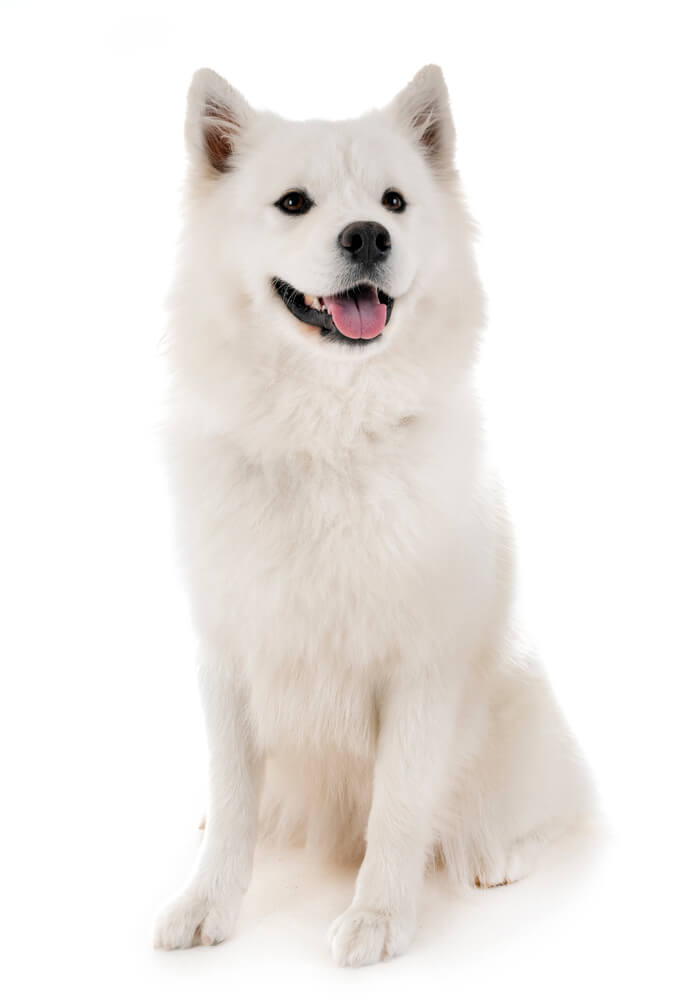
    The American Eskimo Dog is a small to medium sized dog known for its striking white coat, alert expression, and cheerful personality. With its thick double coat, upright ears, plume tail, and confident gait, this breed easily captures attention. Often described as smiling, the American Eskimo Dog earned the nickname “The Dog Beautiful” for good reason.


    Appearance and Breed Characteristics

    The American Eskimo Dog has a dense, snow white double coat with a noticeable mane around the neck and shoulders. Dark eyes, black nose, and black lips create a strong contrast that gives the breed its expressive look. The movement is light, bouncy, and proud, reflecting both intelligence and confidence.


    History and Origin

    Despite its name, the American Eskimo Dog descends from the German Spitz family, a group of northern breed dogs with a history going back thousands of years. These dogs were brought to the United States in the late 1800s and early 1900s.

    The breed gained widespread popularity as a circus performer in the early twentieth century. Their intelligence, trainability, and striking appearance made them stars of traveling shows across America. Many modern American Eskimo Dogs can trace their lineage back to famous circus dogs.


    Personality and Temperament

    American Eskimo Dogs are affectionate, sensitive, and deeply connected to their families. They have an exceptional ability to read human emotions and respond to tone and behavior. This makes them adaptable to different household dynamics.

    Many people adopt an eskie after meeting one in a home or through a friend rather than choosing from a breed book. Their charm and loyalty have earned them the nickname “Heart Bandits” among rescue organizations.


    Intelligence and Training

    This breed is highly intelligent and eager to learn. American Eskimo Dogs respond best to positive training methods that include praise, games, and encouragement. Harsh corrections are ineffective and can damage trust.

    They tend to excel in obedience training, agility, and other dog sports. Many owners report that eskies seem to understand commands almost before they are spoken.


    Size Variations

    The American Eskimo Dog comes in three recognized sizes:

    • Standard: 15 to 19 inches at the shoulder
    • Miniature: 12 to 15 inches at the shoulder
    • Toy: 9 to 12 inches at the shoulder

    All sizes share the same personality traits, intelligence level, and devotion to their families.


    Activity and Lifestyle Needs

    The American Eskimo Dog is not suited for a purely sedentary lifestyle. While they enjoy cuddling and affection, they require daily physical activity and mental stimulation. Walks, play sessions, training games, and puzzle toys help keep them balanced and happy.

    Without sufficient engagement, boredom can lead to unwanted behaviors.


    Watchdog Instincts and Socialization

    Eskies are natural watchdogs. They are alert, vocal, and protective of their home and family. Early and consistent socialization is essential to prevent overprotective or antisocial behavior.

    When properly socialized, they are confident, friendly, and well mannered with visitors.


    Grooming and Shedding

    The thick double coat requires regular maintenance. Brushing two to three times per week is recommended, with daily brushing during seasonal shedding periods. The coat should not be shaved, as it helps regulate temperature and protect the skin.

    Despite their fluffy appearance, the coat naturally repels dirt and does not need frequent bathing.


    Health and Lifespan

    American Eskimo Dogs generally live between 12 and 15 years. Common health concerns may include hip dysplasia, dental problems, and patellar luxation. Responsible breeding, regular vet checkups, and good dental care help maintain long term health.


    Family Life and Living Environment

    This breed thrives when treated as a true family member. American Eskimo Dogs do not do well when left alone for long periods. They may dig or become destructive if bored or ignored.

    They are natural roamers and require supervision and a securely fenced yard. Apartment living is possible only if daily exercise and training needs are fully met.


    Is an American Eskimo Dog Right for You?

    An American Eskimo Dog is ideal for owners who can provide time, attention, training, and companionship. In return, you gain a loyal, intelligent, and affectionate companion who lives to please and protect the people they love.

    If you are looking for a beautiful, active, and deeply devoted dog, the American Eskimo Dog may be the perfect match.

  • Understanding Your Dog: 13 Key Canine Traits Every Owner Should Know

    Every dog owner knows their furry companion has a distinct personality, but understanding what makes your dog tick goes beyond just observing their quirks. Whether you’re dealing with a sensitive soul who needs extra reassurance or an energetic bundle of joy who never seems to tire, knowing your dog’s core traits makes all the difference in how you care for them.

    This comprehensive breakdown covers 13 essential characteristics that define your dog’s behavior, needs, and temperament. From how they react to your emotions to their grooming requirements and activity preferences, you’ll gain practical insights that help you become the owner your dog deserves. Think of this as your roadmap to a happier, healthier relationship with your canine companion.

    Dog Sensitivity Levels

    1. Low-Sensitive Dogs (Level 1): These are the laid-back dogs who seem to take everything in stride. They won’t fall apart if you raise your voice or if the neighbor’s lawnmower starts up unexpectedly. These tolerant companions adapt easily to household chaos, schedule changes, and even periods when you’re not able to give them as much attention (though this doesn’t mean they should be neglected—every dog needs quality time and interaction to thrive). They’re perfect for busy households, families with young kids, or first-time owners who are still learning the ropes.

    2. Mildly Sensitive Dogs (Level 2): These dogs fall somewhere in the middle. They handle most situations without issue but might startle at a sudden loud noise or need a moment to adjust to something new. Their reactions stay mild, though, and they bounce back quickly. They’re flexible enough to fit into most lifestyles without requiring constant accommodation.

    3. Moderately Sensitive Dogs (Level 3): Dogs at this level are tuned into what’s happening around them. They pick up on your mood and notice changes in their routine, but they won’t overreact. With steady training and regular exposure to different situations, these dogs learn to handle whatever life throws at them with confidence.

    4. Sensitive Dogs (Level 4): These dogs feel things deeply. A harsh tone can genuinely upset them, and sudden changes to their daily routine can throw them off balance. They need owners who understand that what seems like a small thing to us can be a big deal to them. Consistency, gentle correction, and positive reinforcement work wonders with sensitive dogs.

    5. High-Sensitive Dogs (Level 5): The most emotionally attuned dogs fall into this category. They take everything personally—your frustration, household tension, unexpected visitors, you name it. These dogs flourish in peaceful, predictable environments with patient owners who communicate calmly and provide plenty of reassurance. If you have a high-sensitivity dog, understanding their emotional needs isn’t optional—it’s essential.

    table of content ↑

    Kid-Friendliness Levels in Dogs

    1. Not Kid-Friendly Dogs (Level 1): Some dogs simply don’t have the temperament for children. They might snap when hugged too tight, react poorly to sudden movements, or get stressed by the unpredictable nature of kids. This isn’t the dog’s fault—it’s just who they are. If you have a dog in this category, keeping them away from children isn’t cruel; it’s responsible. These dogs can be wonderful companions in adult-only homes or with mature teenagers who respect boundaries.

    2. Low Kid-Friendly Dogs (Level 2): These dogs tolerate children in small doses but have clear limits. A quick hug might be fine, but prolonged roughhousing will test their patience. They might grumble, walk away, or show subtle signs of stress. With training and supervision, they can coexist with older children who’ve learned to read dog body language and respect personal space.

    3. Moderately Kid-Friendly Dogs (Level 3): Dogs at this level can handle kids reasonably well. They’re patient enough to tolerate typical kid behavior but still have their breaking point. They work best in families where parents actively teach children how to interact properly with dogs. Supervision remains important, especially during playtime.

    4. Kid-Friendly Dogs (Level 4): These dogs genuinely enjoy being around children. They’re patient with clumsy petting, don’t mind being used as a pillow, and can handle the noise and chaos that kids bring. That said, even the most patient dog deserves breaks, and young children should still be supervised to ensure everyone stays safe and happy.

    5. Highly Kid-Friendly Dogs (Level 5): These are the nanny dogs—patient, gentle, and naturally drawn to children. They don’t just tolerate kids; they actively seek them out and seem to understand that little humans need extra gentleness. They’ll endure dress-up sessions, tea parties, and endless belly rubs without complaint. Even so, teaching kids proper dog etiquette ensures a positive relationship for everyone.

    Choosing a dog based on kid-friendliness means considering your children’s ages and energy levels. Even the most patient dog needs respectful treatment, and even the best-behaved child needs supervision around dogs.

    table of content ↑

    Dog Friendliness Spectrum

    1. Low-Friendly Dogs (Level 1): These dogs prefer to skip the canine social scene entirely. They might bark aggressively at other dogs, pull on the leash trying to create distance, or show outright hostility. Dog parks are their nightmare, not their playground. With dedicated training and gradual socialization, some can learn to tolerate other dogs from a distance, but they’ll likely never be the type to romp with doggy friends.

    2. Moderately Low-Friendly Dogs (Level 2): These dogs are politely standoffish with other canines. They won’t start fights, but they won’t join in the fun either. They prefer observing from the sidelines rather than mixing it up at the dog park. Careful introductions and controlled interactions can help them feel more comfortable, though they’ll probably never be social butterflies.

    3. Moderately Friendly Dogs (Level 3): These dogs take a neutral stance toward other dogs. They won’t seek out playdates, but they don’t mind when another dog approaches. If invited to play, they might join in briefly before losing interest. Regular socialization helps them maintain these comfortable, if not enthusiastic, interactions.

    4. Friendly Dogs (Level 4): These sociable pups genuinely enjoy other dogs’ company. They’re happy to play at the dog park, greet neighbors’ dogs on walks, and generally get along well with canine companions. They read social cues appropriately and know how to engage without being pushy or aggressive.

    5. Highly Friendly Dogs (Level 5): These are the social coordinators of the dog world. They light up when they see other dogs and actively seek out play opportunities. They’re the ones pulling you toward every dog they spot on walks, eager to make a new friend. Multi-dog households and regular dog park visits suit them perfectly.

    Remember that dog friendliness depends on individual personality, early socialization, and past experiences just as much as breed tendencies. Proper training and supervision during dog interactions matter regardless of your dog’s natural friendliness level.

    table of content ↑

    Stranger-Friendliness Levels in Dogs

    1. Low-Friendly Dogs (Level 1): These dogs view strangers as potential threats. They might bark intensely, growl, or position themselves between you and unfamiliar people. This wariness makes them excellent watchdogs but challenging in social situations. Proper socialization from an early age helps, but these dogs will likely always be selective about who they trust.

    2. Moderately Low-Friendly Dogs (Level 2): These cautious dogs need time to warm up to new people. They won’t necessarily bark or growl, but they’ll keep their distance, avoiding eye contact and interactions. Given time and positive experiences, they gradually accept strangers, though they’ll never be the greeting committee.

    3. Moderately Friendly Dogs (Level 3): These dogs are polite with strangers without being overly enthusiastic. They might sniff a visitor’s hand or accept a pat on the head, but they won’t demand attention. They’re comfortable enough with new people but don’t go out of their way to engage. Ongoing socialization keeps them at ease in various social settings.

    4. Friendly Dogs (Level 4): These welcoming dogs are happy to meet new people. They approach strangers with relaxed body language, wagging tails, and friendly curiosity. They make guests feel welcome without being overwhelming. These dogs adapt easily to social situations and public outings.

    5. Highly Friendly Dogs (Level 5): These dogs act like every stranger is a long-lost friend. They enthusiastically greet anyone who comes near, often with full-body wiggles and kisses. While their friendliness is endearing, it can be too much for some visitors. Training helps channel their enthusiasm into more appropriate greetings.

    A dog’s reaction to strangers comes from a mix of genetics, early experiences, and training. Even naturally reserved dogs can learn to be more comfortable around new people with patience and positive reinforcement.

    table of content ↑

    Shedding in Dogs

    Level 1 – Low: These dogs shed so little you’ll barely notice. Your black pants stay black, and your furniture remains relatively hair-free. Perfect for people who value a clean home or have mild allergies.

    Level 2 – Moderately Low: You’ll find some hair around the house, particularly during seasonal changes, but it’s manageable. A quick vacuum once or twice a week keeps things under control.

    Level 3 – Moderate Shedding: These dogs leave a noticeable amount of fur behind. You’ll find hair on furniture, clothes, and floors regularly. The vacuum becomes your friend, and lint rollers are a necessity. Still, it’s nothing overwhelming with regular grooming.

    Level 4 – High Shedding: Hair everywhere, all the time. Your furniture collects tumbleweeds of fur, and you’ll vacuum multiple times a week. These dogs need frequent brushing to manage the constant shedding. Not ideal for meticulous housekeepers or people with allergies.

    Level 5 – High: Extreme shedding that tests even the most patient dog owners. Fur coats your home constantly, requiring daily vacuuming and frequent grooming sessions. If you’re not prepared to embrace dog hair as a lifestyle choice, these breeds will challenge you.

    table of content ↑

    Grooming Needs in Dogs

    Level 1 – Easy: Low-maintenance dogs that practically groom themselves. A quick brush every couple of weeks and occasional baths are all they need. Perfect for owners who want to spend time playing with their dog, not grooming them.

    Level 2 – Moderately Easy: Basic grooming keeps these dogs looking good. Regular brushing, nail trims, and the occasional bath are straightforward tasks you can handle at home without professional help.

    Level 3 – Moderate: These dogs need consistent grooming attention but nothing too demanding. Weekly brushing sessions, monthly baths, and regular nail care keep them in good shape. The routine is manageable but requires commitment.

    Level 4 – Moderately Hard: These dogs demand more dedicated grooming. Their coats need regular brushing to prevent mats, occasional trimming, and professional grooming visits every few months. Budget time and money for their grooming needs.

    Level 5 – Hard: High-maintenance dogs with demanding grooming requirements. Their long or thick coats need daily brushing, regular professional grooming appointments, and consistent upkeep. Grooming becomes a significant time and financial investment. If you’re not ready to commit to the grooming lifestyle, these dogs will overwhelm you.

    table of content ↑

    Overall Health in Dogs

    Level 1 – Need more attention to health: These dogs face higher risks of genetic health problems, often due to poor breeding practices. They require vigilant health monitoring, regular vet visits, and potentially higher medical costs throughout their lives. Understanding breed-specific health issues and working with a knowledgeable vet helps catch problems early.

    Level 2 – Below Average Health: Dogs at this level carry some genetic health concerns that need monitoring. Regular check-ups and staying alert to breed-specific issues help manage their health, though they may face more problems than average dogs.

    Level 3 – Moderate Health: These dogs have typical health profiles for their size and type. They need standard preventive care—regular vet visits, vaccinations, and basic health maintenance—but don’t carry significant genetic baggage. Most live healthy lives with appropriate care.

    Level 4 – Above Average Health: Hardy dogs with fewer genetic health concerns. They still need regular veterinary care and preventive measures, but they tend to stay healthy with basic attention. Medical issues, when they occur, are typically minor and manageable.

    Level 5 – Healthy as an ox: Exceptionally robust dogs with excellent genetic health. They’re resilient, rarely face serious health problems, and typically live long, active lives. While no dog is completely immune to health issues, these breeds come pretty close with proper care.

    table of content ↑

    Trainability in Dogs

    Level 1 – Self-Willed: These independent thinkers have their own agenda. Training sessions feel like negotiations, and they’ll question every command. They need patient, creative owners who can make training engaging and rewarding. Progress comes slowly, but with persistence and positive reinforcement, they can learn—they just won’t be the star pupils of obedience class.

    Level 2 – Moderately Independent: These dogs can be trained but don’t make it easy. They have moments of cooperation mixed with stubborn streaks. Consistency and patience are key, along with finding the right motivation (usually high-value treats or favorite toys).

    Level 3 – Average Trainability: Solid, reliable learners who respond well to standard training methods. They need consistent practice and clear communication but generally pick up commands with reasonable effort. They’re neither frustratingly stubborn nor exceptionally quick studies.

    Level 4 – Eager to Learn: These enthusiastic students love training sessions. They pick up new commands quickly and genuinely enjoy the learning process. Training feels more like fun than work with these motivated dogs.

    Level 5 – Eager to Please: The teacher’s pets of the dog world. They live to make you happy and excel at training because they’re so focused on your approval. Commands stick after just a few repetitions, and they constantly look to you for guidance. Training these dogs is pure joy.

    table of content ↑

    Intelligence in Dogs

    Level 1 – Low: These dogs process information more slowly and prefer simple, straightforward routines. Complex training or problem-solving isn’t their forte. They need basic, repetitive training methods and clear, consistent rules. Their simplicity can actually be refreshing—what you see is what you get.

    Level 2 – Below Average: These dogs learn at a slower pace and need extra time to understand new commands. Multiple repetitions and patience are required, but they can master basic obedience with dedicated training.

    Level 3 – Average Intelligence: Standard learners who handle typical training and daily life without issues. They pick up commands at a normal pace and can solve basic problems. They’re neither brilliant nor dim—just reliably capable.

    Level 4 – Above Average: Sharp dogs who catch on quickly and enjoy mental challenges. They learn new commands easily and can figure out solutions to problems independently. These smart cookies benefit from puzzle toys and varied activities to keep them engaged.

    Level 5 – High: Exceptionally intelligent dogs who think several steps ahead. They learn commands instantly, solve complex problems, and sometimes outsmart their owners. Their intelligence requires constant mental stimulation—bored smart dogs become destructive dogs. Advanced training, puzzle toys, and varied activities are essential.

    table of content ↑

    Vocalization Tendency in Dogs

    Level 1 – Only to Alert: These quiet dogs bark only when necessary—a stranger at the door, an unusual noise, something genuinely worth mentioning. The rest of the time, they’re silent companions. Perfect for apartment living or noise-sensitive environments.

    Level 2 – Occasionally Vocal: These dogs bark selectively in specific situations—doorbell rings, seeing other dogs on walks, or during play. Their barking is purposeful and manageable, not constant or disruptive.

    Level 3 – Moderate Vocalization: These dogs express themselves regularly. They’ll bark at various triggers throughout the day—passing strangers, wildlife in the yard, delivery trucks. The noise level is noticeable but not overwhelming. Training helps manage when and how much they vocalize.

    Level 4 – Quite Vocal: Frequent barkers who have opinions about everything. They announce visitors, comment on neighborhood activity, and vocalize during play. The noise level can test patience, especially in close quarters or with nearby neighbors.

    Level 5 – Avid Singer: These dogs never met a bark, howl, or whine they didn’t like. They vocalize constantly—excitement, boredom, happiness, or just because. Their symphony of sounds makes them challenging for apartments, quiet neighborhoods, or anyone who values peace and quiet. Consider noise restrictions before bringing one of these chatty companions home.

    table of content ↑

    Energy Level in Dogs

    Level 1 – Low: These couch potatoes live for lazy days. They’re content to snooze most of the day, take short leisurely walks, and spend evenings relaxing by your side. Perfect for apartment dwellers or anyone who prefers a calm lifestyle.

    Level 2 – Moderately Low: These relaxed dogs enjoy occasional bursts of activity but tire quickly. A short play session or moderate walk satisfies them before they’re ready to rest again. They suit owners who want some activity without constant demands.

    Level 3 – Moderate Energy: Balanced dogs who enjoy regular activity but also appreciate downtime. They’re up for daily walks and playtime but won’t bounce off the walls if they miss a day. They adapt well to various activity levels.

    Level 4 – Energetic: These active dogs need regular exercise and mental stimulation. Daily walks, play sessions, and activities keep them satisfied. Skipping exercise leads to pent-up energy that comes out in less desirable ways.

    Level 5 – High: Non-stop energy machines who seem to have endless batteries. They’re ready to go from dawn to dusk, needing multiple exercise sessions, intense play, and constant stimulation. These dogs suit very active owners who can match their enthusiasm. Without sufficient outlets, their energy becomes destructive.

    table of content ↑

    Exercise Needs in Dogs

    Level 1 – Low: Minimal exercise keeps these dogs happy. Short, gentle walks and brief play sessions in the yard meet their needs. They’re ideal for seniors, people with limited mobility, or anyone who prefers a relaxed daily routine.

    Level 2 – Moderately Low: These dogs need light, regular activity—a couple of short walks and some playtime. They’re content without intense exercise and fit well into moderately active lifestyles.

    Level 3 – Moderate Exercise: Standard exercise requirements—daily walks, regular play sessions, and opportunities to move around. They need consistent activity to stay healthy and happy but don’t demand extreme physical challenges.

    Level 4 – Energetic: High exercise needs requiring daily vigorous activity. Long walks, running, fetch sessions, or active play keep them satisfied. These dogs suit owners who enjoy outdoor activities and can commit to regular exercise routines.

    Level 5 – High: Extreme exercise demands that go beyond typical dog ownership. These dogs need multiple long exercise sessions daily—running, hiking, agility training, or dog sports. They’re built for endurance and thrive on intense physical challenges. Only consider these dogs if you’re genuinely active and ready to make exercise a major part of your daily schedule.

    table of content ↑

    Playfulness Potential in Dogs

    Level 1 – Low: These serious dogs prefer calm activities over play. They’re not interested in fetch, tug-of-war, or silly games. They’d rather relax quietly beside you. Perfect for owners who want a serene companion rather than a playful partner.

    Level 2 – Moderately Low: These dogs enjoy brief play sessions occasionally but quickly lose interest. They might play for a few minutes before they’re ready to rest. They balance playfulness with a generally calm demeanor.

    Level 3 – Moderate Playfulness: These dogs enjoy regular play without being obsessive about it. They’re happy to engage in games and activities but also appreciate quiet time. They offer a nice balance of fun and relaxation.

    Level 4 – Playful: These fun-loving dogs are usually ready for action. They actively seek play opportunities, bring you toys, and invite you to join their games. Life with them includes plenty of active, joyful moments.

    Level 5 – High: Perpetual puppies who never outgrow their playful nature. They’re always on, always ready, always enthusiastic about the next game. Their playfulness is infectious but can be exhausting. They need owners who match their enthusiasm and won’t mind constant requests to play.

    table of content ↑

    Insights

    1. Tailoring Your Approach: Knowing your dog’s sensitivity level helps you choose training methods that work with their personality, not against it, creating a positive learning environment.
    2. Family Dynamics: Matching your dog’s kid-friendliness and dog-friendliness to your household situation prevents problems before they start and ensures everyone feels safe and comfortable.
    3. Socialization Matters: While breed tendencies exist, proper socialization and training often matter more than genetics when it comes to how your dog interacts with strangers and other dogs.
    4. Maintenance Considerations: Honestly assessing how much time and money you can dedicate to grooming prevents frustration and helps you choose a dog whose needs match your lifestyle.
    5. Wellness and Prevention: Understanding your dog’s health profile helps you stay ahead of potential problems and work with your vet to maintain quality of life.
    6. Learning Styles: Dogs learn differently based on their trainability and intelligence levels. Adapting your teaching approach to their cognitive style makes training more effective and enjoyable.
    7. Vocalization Habits: Knowing whether your dog is naturally quiet or vocal helps you set realistic expectations and address noise concerns proactively.
    8. Activity Levels: Matching your dog’s energy and exercise needs to your own activity level creates harmony in your household and prevents behavioral problems from unmet needs.
    9. Playful Companionship: Understanding your dog’s playfulness potential helps you provide the right mix of active engagement and quiet companionship they need to thrive.

    table of content ↑

    Conclusion

    Understanding your dog’s unique characteristics transforms the relationship you share. When you recognize what makes your companion tick—their sensitivity level, social preferences, energy demands, and everything in between—you stop fighting against their nature and start working with it. This knowledge helps you anticipate needs, prevent problems, and build genuine connection based on who your dog actually is, not who you wish they’d be. Your dog has been trying to show you their personality all along; now you have the framework to truly understand what they’ve been saying.