
TL;DR – Key Takeaways
- Samoyeds are gorgeous, loyal, and affectionate – but they are not a low-maintenance breed by any measure.
- Grooming is a serious, ongoing commitment. Expect hours of brushing every week and fur on every surface you own.
- They bark. A lot. This isn’t something you train out of them – it’s hardwired.
- They need company constantly. A Samoyed left alone all day is a Samoyed that will destroy your house.
- If you’ve read all of this and still want one, you’re probably the right person. Welcome to the club.
You’ve seen the pictures. Of course you have. That ridiculous white fluffball with the permanent grin, looking like a cloud that learned to fetch. You’ve probably watched a dozen Instagram reels of Samoyeds bouncing through snow or flopping onto their owner’s lap, and you’ve thought: I need one of those in my life.
We get it. We really do.
At the Arctic Dog Rescue and Training Center, we’ve placed hundreds of arctic breed dogs over the years – Huskies, Malamutes, American Eskimos, and yes, Samoyeds. We love every single one of them. But love doesn’t mean we’re going to lie to you about what you’re signing up for.
So before you fill out that adoption application, let’s talk honestly about what life with a Samoyed actually looks like. Not the Instagram version. The real one.
The Grooming Reality
Let’s start with the big one, because this is where most new Samoyed owners get blindsided.
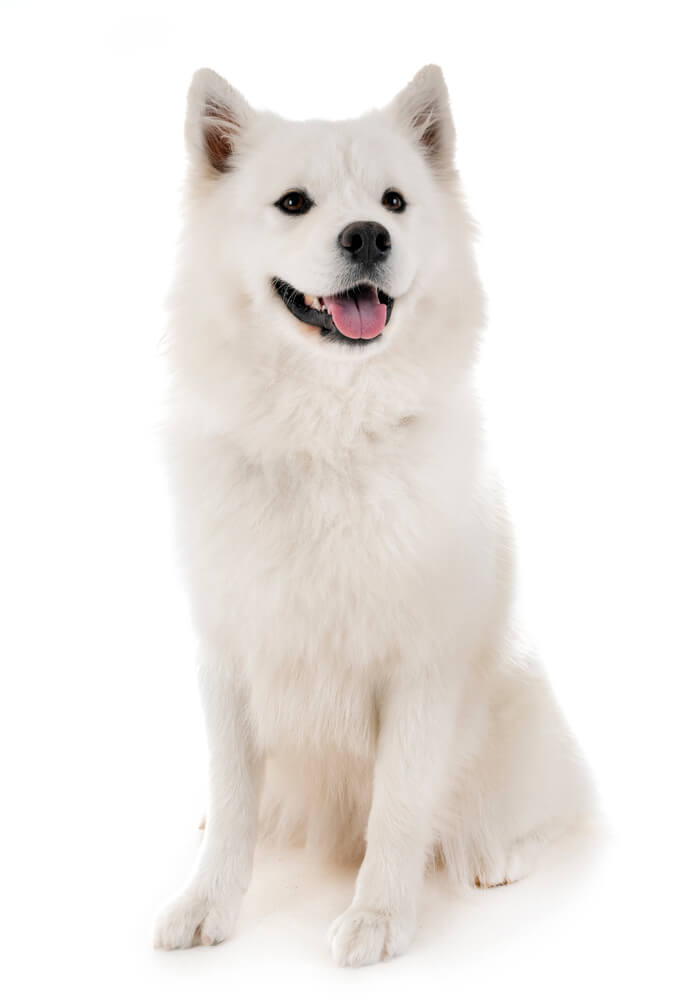
That magnificent white coat? It doesn’t maintain itself. The Samoyed Club of America has actually addressed this directly, saying that too many new owners are being sold on the idea that Samoyeds are “easy” to keep clean, never shed, and never need to be bathed. Their words, not ours: “This is misrepresentation of the breed.”
Here’s what grooming a Samoyed actually involves:
Brushing at minimum two to three times per week – and that’s during the good months. When they “blow” their coat (typically twice a year for females, once for males), you’ll be brushing daily. We’re not talking a quick once-over, either. You’re working through a dense double coat with a pin brush, a rake, and a comb, section by section, for 30 to 60 minutes at a stretch.
And the fur. Oh, the fur. It will be on your couch, in your coffee, woven into your work clothes, floating through the air like dandelion seeds. During coat-blow season, you can pull clumps of undercoat out with your fingers. Some Samoyed owners actually collect the shed fur and spin it into yarn – that’s how much of it there is.
One more thing the internet won’t tell you: a wet, dirty Samoyed smells like a filthy wool blanket. That “odor-free” claim you’ve read? It applies to a clean, well-maintained coat. Skip a few grooming sessions and you’ll find out the hard way.
If you don’t have the time, patience, or willingness to make grooming a regular part of your life – don’t adopt a Samoyed.
The Noise Factor
Huskies howl. That’s well documented. But people are often surprised to learn that Samoyeds are actually louder in day-to-day life – because Samoyeds bark. Frequently. Enthusiastically. At everything.
A squirrel in the yard? Barking. The mailman three houses down? Barking. A leaf blowing across the patio? You guessed it. According to the American Kennel Club, Samoyeds are notably vocal dogs, and their bark is often high-pitched and carries.
They also “talk” – a kind of warbling, woo-woo vocalization that’s endearing at first and less charming at 6 AM on a Saturday. Some Samoyeds will howl along to music or sirens, which can be genuinely funny until your neighbors stop laughing.
This isn’t a behavioral problem you can simply train away. Vocalization is deeply embedded in this breed. The Samoyedic peoples of Siberia actually valued this trait – the dogs served as alert systems in addition to herding and sledding. That instinct hasn’t gone anywhere in the last few thousand years.
If you live in an apartment, a townhouse with shared walls, or any situation where noise complaints are a real concern – don’t adopt a Samoyed.
The Velcro Dog Problem
Here’s something the breed profiles don’t always emphasize enough: Samoyeds are profoundly dependent on human company. This isn’t a dog that’s going to be content hanging out in the backyard while you’re at work for nine hours.
The Samoyedic peoples of Siberia didn’t just work alongside these dogs – they slept with them. Literally. The dogs would pile onto their owners at night for warmth in subzero temperatures. That intimacy bred a dog that considers separation from its people to be a genuine crisis.
A Samoyed left alone for extended periods will get anxious, and an anxious Samoyed gets destructive. We’re talking chewed door frames, shredded cushions, excavated flower beds, and enough barking to make your neighbors consider moving. This isn’t spite. It’s panic.
We’ve seen this pattern play out many times at ADRTC. A family falls in love with a Samoyed, brings it home, and six months later the dog ends up in our rescue because “it destroyed everything” or “it just wouldn’t stop barking.” The dog didn’t fail. The situation failed the dog.
If both adults in the household work full-time away from home, and no one is around during the day, this breed is going to struggle. A second dog can help – Samoyeds are pack animals and do better with canine company – but it’s not a complete solution. They want you.
If your lifestyle means your dog will be home alone most of the day, most days – don’t adopt a Samoyed.
The Exercise Equation
Samoyeds were bred to herd reindeer and pull sleds across Siberian tundra. That heritage left them with an engine that idles at a speed most people aren’t prepared for.
A fifteen-minute walk around the block is not exercise for a Samoyed. It’s a warm-up. These dogs need a solid hour or more of vigorous activity every day – running, hiking, playing fetch, or doing some form of structured work. The Samoyed Club of America notes that activities like herding trials, agility courses, and even skijoring (being pulled on skis by your dog) are ideal outlets for their energy.
Without adequate exercise, Samoyeds get creative. And by creative, we mean destructive. Digging is a particular favorite – they’ll turn your yard into a moonscape if they’re bored. They dig to cool off, they dig to entertain themselves, and sometimes they dig because there might be something interesting under there. Who knows?
Here in Albuquerque, we deal with an added challenge: heat. Samoyeds have a thick double coat designed for Arctic winters, not desert summers. You can absolutely keep a Samoyed in a warm climate – the coat actually insulates against heat as well as cold – but you’ll need to exercise them during the coolest parts of the day. Early morning and after sunset become your new schedule, no exceptions.
Never, under any circumstances, shave a Samoyed’s coat thinking you’re helping them stay cool. That double coat is their temperature regulation system. Shaving it disrupts that system and can lead to sunburn and overheating – the exact opposite of what you intended.
The Stubborn Streak
People hear “intelligent” and think “easy to train.” With Samoyeds, intelligence and trainability are two very different things.
Yes, Samoyeds are smart. The book The Intelligence of Dogs by Stanley Coren ranked them 44th out of 138 breeds, finding they typically need 15 to 25 repetitions to learn a new command. That’s solidly above average. But smart doesn’t mean obedient. It means they understand exactly what you’re asking – and then decide whether it’s worth their time.
Samoyeds have an independent streak that comes from centuries of working alongside humans as partners, not subordinates. They weren’t retrieving ducks on command. They were making real-time decisions about how to manage reindeer herds in brutal conditions. That kind of autonomy doesn’t just disappear because you’re holding a treat.
Training a Samoyed requires patience, consistency, and a sense of humor. Positive reinforcement works. Harsh corrections don’t – these are sensitive dogs, and they’ll shut down or become fearful if you come at them with force. Keep sessions short, keep them interesting, and accept that your Samoyed will occasionally look you dead in the eye and do exactly what you just asked them not to do.
If you need a dog that follows commands without question, a Samoyed will frustrate you. But if you can appreciate a dog with some personality and opinions of its own? You’ll get along just fine.
The Cost Reality
Let’s talk money, because the purchase price (or adoption fee) is just the beginning.
If you’re buying from a breeder, Samoyeds typically cost between $1,000 and $3,000 for a puppy. Adopting through a rescue like ADRTC is significantly less – our adoption fees range from $175 to $225 – but either way, the initial cost is the smallest part of the equation.
Grooming is the big ongoing expense. Professional grooming for a Samoyed runs $75 to $150 per session, and during coat-blow season, you may need those sessions more frequently. Even if you do most of the grooming yourself, you’ll invest in quality tools: a good pin brush, an undercoat rake, a slicker brush, and a high-velocity dryer will set you back $100 to $200 upfront.
Food for a medium-to-large dog runs $60 to $100 per month for quality nutrition. Then there are routine costs – annual exams, vaccinations, flea and tick prevention, and heartworm prevention all add up. Your first year with any dog involves a financial learning curve, and we’ve written a detailed shopping list to help you prepare.
None of this should scare you away if you’re financially prepared. But if the monthly cost of maintaining a high-maintenance breed would strain your budget, it’s better to know that now.
The “Sammie Smile” and What It Really Means
Now, after all those warnings, let’s talk about why people fall so hard for this breed – because the reasons are real.
That famous Samoyed smile isn’t just cute. It’s actually functional. The upturned corners of the mouth evolved to prevent drooling, which in Siberian temperatures would freeze to the dog’s face. It’s a practical adaptation that happens to make them look perpetually happy. And honestly? Most of the time, they are.
Samoyeds are among the most affectionate breeds you’ll ever encounter. They form deep bonds with their families and have a gentle, patient temperament that makes them wonderful with children. The Samoyedic peoples trusted these dogs to sleep with their kids – that tells you something about the breed’s fundamental nature.
They’re social butterflies, too. Unlike Huskies, who can be aloof, or Malamutes, who can be reserved with strangers, Samoyeds generally love everybody. Your friends, your neighbors, the delivery driver – they’re all potential best friends as far as your Samoyed is concerned.
And there’s something about their presence that’s hard to quantify. A Samoyed in the room changes the energy. People stop and stare. Kids light up. Other dog owners want to talk to you. If you’ve ever wanted a conversation starter that also keeps your feet warm on the couch, this is your breed.
Are Samoyeds Good for First-Time Owners?
Here’s where we’ll be straightforward: a Samoyed is not the easiest first dog. They’re not the hardest, either – that distinction probably goes to their Malamute cousins – but they demand more time, attention, and maintenance than many people expect.
If you’re a first-time dog owner who works from home, has an active lifestyle, and is genuinely excited about the grooming commitment, a Samoyed can absolutely work. If you’re a first-time owner who works long hours away from home and has never dealt with a high-shedding breed, you’re setting yourself up for frustration – and the dog up for a trip back to rescue.
The honest answer? Do your homework first. Read our breed profile for the Samoyed to understand the temperament ratings, size, and characteristics. If you’re also considering other arctic breeds, take a look at our Siberian Husky adoption guide and American Eskimo guide to compare. And browse through our full breed explorer – you might discover a breed you hadn’t considered that fits your life better.
The Verdict
If you’ve read this far – really read it, not just skimmed the headings – and you’re still thinking “yes, I want this dog,” then we like your chances.
You know about the grooming. You know about the barking. You know that this fluffy white angel will eat your couch if you leave it alone too long, and you know that your black clothes will never be truly black again.
You know all of that, and you’re still here.
Then we take great pleasure in welcoming you to the Samoyed family. Join the rest of us who’ve accepted that our homes will never be fur-free, that our mornings start with a 5:30 AM “woo-woo” alarm clock, and that we wouldn’t trade any of it for a quieter, cleaner, less demanding life.
It’s hard to be humble when you own a Samoyed. But honestly? Nobody’s trying.
If you’re ready to take the next step, learn about our adoption process or contact us directly to ask about available Samoyeds. And if you’re still on the fence, that’s okay too. The right dog is worth waiting for – and the right owner is worth waiting for, too.
Leave a Reply