Australian Shepherd

Australian Shepherd breed is originally from United States. Also known as Aussie, Little Blue Dog.
Breed information
| Popularity | 14 of 202 (2025) · rose from 20th in 2013 |
| Name | Australian Shepherd |
| Other names | Aussie, Little Blue Dog |
| From country | United States |
| Standards | |
| Breed groups | Herding (UKC) |
| Type | Purebred |
| Size | Medium |
| Coat | Medium · double |
| Life span | 12 - 15 years |
| Temperament | active,affectionate,friendly,good-natured,intelligent,protective,loving |
| Height female | 18-21 inches (46-53 cm) |
| Height male | 20-23 inches (51-58 cm) |
| Weight female | 40-55 pounds (18-25 kg) |
| Weight male | 50-65 pounds (23-29 kg) |
| Colors | black,blue merle,red,red merle |
| Litter Size | 6 - 9 puppies |
| Puppy Price | Average $600 - $1000 USD |
Australian Shepherd popularity by year (AKC)
| Year | 2013 | 2014 | 2015 | 2016 | 2017 | 2018 | 2019 | 2020 | 2021 | 2022 | 2023 | 2024 | 2025 |
|---|---|---|---|---|---|---|---|---|---|---|---|---|---|
| Rank | 20 | 18 | 17 | 16 | 17 | 15 | 13 | 12 | 12 | 12 | 12 | 12 | 14 |
Source: American Kennel Club registration statistics. All breeds ranked by popularity
Australian Shepherd breed image

Australian Shepherd Pros and Cons
There are 2 pros and 5 cons of owning Australian Shepherd.
| Pros 👍 | Cons 👎 |
|---|---|
| Good with children | Hard to groom |
| Good with other dogs | Prone to health problems |
| Barks or howls a lot | |
| Needs a lot of exercise | |
| Not hypoallergenic |
Breed Characteristics
| Sensitivity Level |
Low-sensitive
High-sensitive
|
High-sensitivity dogs can be deeply affected by their owner's actions. If you shout loudly at the dog, ignore it, or if your child pulls its tail, it may take offense. On the other hand, low-sensitivity dogs, often referred to as 'tolerant' dogs, handle these situations more easily. If you're an emotional person, have a busy lifestyle, sometimes neglect your dog, or have young children, we don't recommend getting a high-sensitivity dog. |
|
| Kid-Friendly |
No-Kid-Friendly
Kid-Friendly
|
Kid-friendly dogs are highly tolerant of children's behavior, including hugs and playful "games" like attempting to saddle them. They typically interact kindly and patiently with kids, making them great family pets. Not Kid-Friendly Dogs - Dogs in this category do not tolerate such behavior from children and may react negatively or even aggressively. Be cautious about bringing a not kid-friendly dog into a family environment. |
|
| Dog Friendly |
Low-friendly
High-Friendly
|
Dog-friendly characteristics vary widely, ranging from low-friendly to high-friendly. It's important to note that a dog's level of friendliness depends on several factors, and breed is just one of them. Dogs with high friendliness tend to be sociable and enjoy interacting with other dogs. They may happily play with other canines or simply remain calm and relaxed when in the company of other dogs. Conversely, dogs with lower levels of friendliness may exhibit different behaviors. They might be more prone to barking, trying to engage in fights with other dogs, or even attempting to run away from unfamiliar dogs or situations. Keep in mind that a dog's friendliness is influenced by their individual personality, upbringing, and experiences. So, it's essential to consider these factors when assessing your furry friend's social behavior. |
|
| Friendly Toward Strangers |
Not-friendly
Everyone Is My Best Friend
|
It's important to understand that a dog's behavior towards strangers is influenced by various factors, with breed being just one of them. A dog that is friendly toward strangers will typically exhibit pleasant behavior when your friends or visitors come to your home. They won't display aggression or attempt to attack them. Instead, they will likely be welcoming and sociable. On the other hand, some dogs may be naturally shy or even fearful of strangers. However, it's crucial to note that a dog's socialization plays a significant role in their behavior. Proper socialization lessons can help any dog become more welcoming to strangers, regardless of their breed. That said, if you happen to choose a breed known for its high stranger-friendly rating but don't invest time in training and socialization, the dog may still exhibit unfriendly behavior toward your visitors. Remember, a dog's behavior is a product of both their breed tendencies and their upbringing. |
|
| Amount Of Shedding |
No Shedding
Hair Everywhere
|
|
What's crucial to note is that the extent of shedding can vary from one breed to another. Some dogs shed consistently throughout the year, while others may have specific seasonal shedding patterns. There are also breeds that shed minimally, and in some cases, almost not at all. When choosing a dog, it's essential to consider your personal preferences and standards regarding shedding. Your choice should align with how much you're willing to handle in terms of grooming and cleaning to keep your home and clothes free from excessive dog hair. |
|
| Easy To Groom |
Hard
Easy
|
|
Some breeds are low-maintenance and can be brushed quickly and easily. Others may need regular clipping, grooming, and bathing to keep them looking their best. When choosing a dog, it's important to assess how much time and money you're willing to invest in their grooming needs. Your decision should align with your preferences and your commitment to providing the necessary care for your furry friend. |
|
| General Health |
Need more attention to health
Healthy as an ox
|
|
It's important to be aware that some dogs may face health challenges due to irresponsible breeding practices. One example of such health issues is hip dysplasia, which is a genetic problem. However, it's essential to understand that not every dog of a specific breed will develop these health issues, although they may be more prone to them. When adopting a puppy, it's a good practice to gather information about any genetic illnesses associated with the breed. For more detailed information, you may also want to consult with a shelter or rescue organization, as they can provide insights into the physical health of the puppy's parents or siblings. |
|
| Easy To Train |
Self-Willed
Eager to Please
|
|
It's worth noting that some dog breeds are more trainable than others. For instance, certain breeds may quickly grasp and establish associations between words like 'stay,' corresponding actions (such as staying in place), and the resulting rewards. On the other hand, some breeds may require more time and attention during training. Dogs are highly intelligent animals, but they often like to understand what's in it for them when they follow your commands. This is where games and rewards can be valuable tools in training and motivating them. |
|
| Intelligence |
Low
High
|
|
Different dog breeds excel in specific tasks and exhibit varying levels of intelligence, concentration, and quick decision-making abilities. For instance, breeds bred for their intelligence, like Border Collies, may excel in activities such as herding livestock. These dogs require more mental stimulation to thrive compared to breeds designed for physical endurance and running. Understanding your dog's specific needs is essential to ensure they are mentally engaged and don't engage in unwanted behaviors like chewing and digging. To meet these needs, consider interactive toys and activities, such as obedience training for dogs in need of mental engagement, or search and rescue activities for those with high activity levels and keen senses. |
|
| Tendency To Bark Or Howl |
Only To Alert
Avid singer
|
|
It's important to understand that vocalization varies between dog breeds. Some dogs are naturally more vocal, and they can bark and howl at different pitches. For instance, consider the hound, known for its distinctive barking and howling. You'll need to decide if the sound of their vocalizations might become bothersome or if you find it somewhat musical. Additionally, if your chosen breed has a history of hunting, they might constantly chase and howl at nearby wildlife. If you're looking for a watchdog and your dog is alert, it may bark at everyone it encounters. These factors are essential to consider when selecting a dog breed, especially if you have neighbors or are subject to any noise restrictions. |
|
| Energy Level |
Couch Potato
High Energy
|
|
A dog's energy level is often influenced by their breeding, as some breeds were designed for specific tasks like herding livestock or retrieving game for hunters. Dogs with high energy levels will require plenty of interaction and exercise. They tend to be more active and enjoy activities such as playing, running, tumbling, and exploring new smells and sights. On the other hand, some breeds are low-energy and prefer lounging on the couch with you, taking naps, and enjoying Netflix marathons. When choosing a dog breed, it's essential to consider your own activity level and lifestyle. Select a breed that aligns with your preferences and can comfortably fit into your daily routine. |
|
| Exercise Needs |
Low
Need a lot
|
|
Different dog breeds have varying requirements when it comes to physical activity. Some breeds may be content with a leisurely stroll in the evening, while others might crave several vigorous laps around the block. Their exercise needs are often linked to their original purposes, such as hunting or herding, which influence their energy levels. Dogs with high energy levels that don't receive adequate exercise may be prone to weight gain and may engage in behaviors like digging, chewing, and excessive barking. High-energy dogs tend to thrive when paired with individuals who are active, enjoy the outdoors, or have an interest in training their dog for competitions. |
|
| Potential For Playfulness |
Only When You Want To Play
Non-Stop
|
|
Dog breeds exhibit a wide range of personalities, and this includes their inclination for play. Some breeds are consistently playful and seem to stay in a perpetual puppy state of mind. In contrast, other breeds tend to be more serious and enjoy their moments of relaxation. When choosing a dog, it's important to consider whether the idea of having a playful companion excites you or if you prefer a more relaxed and laid-back dog. Additionally, factors such as the presence of children or other pets in your household should be taken into account. Another option to explore is adopting an older dog, which might be less demanding but still enjoys interacting and playing, providing a balance between playfulness and a calmer demeanor. |
|
| Adapts Well To Apartment Living |
Needs Space
Apartment Friendly
|
|
Apartment life means limited floor space, often no private yard, and neighbours on the other side of the wall. Size matters, but it is not the whole story. Some large breeds are calm indoors and do well in a flat as long as they get their daily walks and runs outside. Some small breeds are so active or so vocal that a small home and thin walls become a problem. When you live in an apartment, look at this rating together with the breed's energy level, exercise needs and tendency to bark. Plan for several walks a day, whatever the size of the dog. |
|


Australian Shepherd temperament at a glance
The Australian Shepherd temperament comes straight from the ranch: quick, watchful, devoted to its people and happiest with a job to do. Aussies were bred to move sheep and cattle all day and make their own calls when the stock went the wrong way. That same brain and drive make them excellent partners for active owners and a handful for anyone who wants a quiet house dog.
- Despite the name, the breed was developed in the American West.
- Aussies learn fast and get bored fast, so they need daily exercise and something to think about.
- Many carry the MDR1 mutation, which makes some common drugs dangerous. A cheap DNA test tells you.
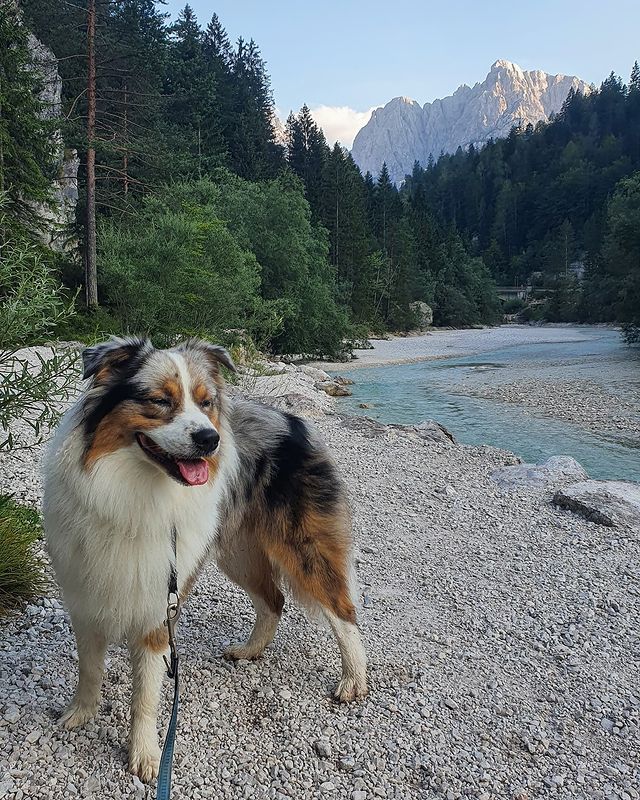
Australian Shepherd history: why an American dog has an Australian name
Nobody kept a stud book for working ranch dogs in the 1800s, so the breed's origin is pieced together from old newspaper accounts, ranch lore and, more recently, DNA. The AKC sums it up as "a European breed perfected in California by way of Australia."
The oldest layer is Spanish. Spanish colonists brought Churra sheep and herding dogs to the Americas from the 1500s, first to New Mexico and later to California. Some historians point to the Carea Leonés of northwest Spain, a small merle sheepdog that can have blue eyes, as a look-alike ancestor, though there is no record of it crossing the Atlantic.
The bigger push came in the mid-1800s. The California Gold Rush and then the Civil War created a huge demand for mutton and wool. Flocks came west from the Midwest and East with their collie-type "English Shepherds", often merle or tricolor, and some born with half tails or none. Merino sheep also arrived from Australia, where a German émigrée had introduced improved Saxon merinos. Newspaper reports of the Australian flocks mentioned the "little blue dogs" that came with them. Nobody in Australia called them Australian Shepherds. American ranchers did, and before long every merle sheepdog in the West got the name.
Basque herders, who worked western sheep from the 1870s, are often credited with the breed too. The AKC's breed historians are skeptical: most Basques reached California from South America, not Australia, and it is unclear whether they brought dogs at all.
Genetics has since settled part of the argument. A 2017 study of 161 breeds published in Cell Reports placed the Australian Shepherd in the "UK Rural" clade, next to the Collie, Shetland Sheepdog and Border Collie. The shared MDR1 mutation and Collie eye anomaly point the same way: whatever else went into the mix, the Aussie's backbone is British herding stock. The study also found MDR1 in about 10 percent of German Shepherds, which suggests the Aussie either contributed to that breed or shares an ancestor with it, possibly German herding dogs that travelled with the merinos.
From ranch dog to rodeo star
For about a century the Aussie was a working dog known mostly to stockmen. That changed in the 1950s and 60s thanks to Jay Sisler, an Idaho rancher who toured rodeos in the US and Canada with a trick dog act. His dogs Stub, Shorty and Queenie did balancing and rope tricks that would be hard to teach most breeds, and they later appeared in Disney films.
Breeders kept the working lines going. Juanita Ely in Arizona and the Hartnagle family in Colorado, who bought dogs from Ely, are behind many of the foundation pedigrees.
Recognition timeline
- 1957: an Aussie named Panda is registered with the National Stock Dog Registry, and the Australian Shepherd Club of America (ASCA) is founded.
- 1977: ASCA adopts the first official breed standard.
- 1979: the United Kennel Club recognises the breed.
- 1993: full AKC recognition in the Herding Group, under a standard approved in 1991.
- The FCI later recognised it under standard no. 342, with the United States as country of origin.
Colors, eyes and the bobtail
Australian Shepherd colors
The standard accepts four colors: blue merle, red merle, black and red, each with or without white markings and copper (tan) points. The blue merle Australian Shepherd is the one most people picture: a grey coat marbled with black. Red merle is the same pattern on a red-brown base. Merles darken with age. White should not dominate the head, and the eyes must be fully surrounded by color, partly because pigment around the eyes and ears is linked to normal sight and hearing.
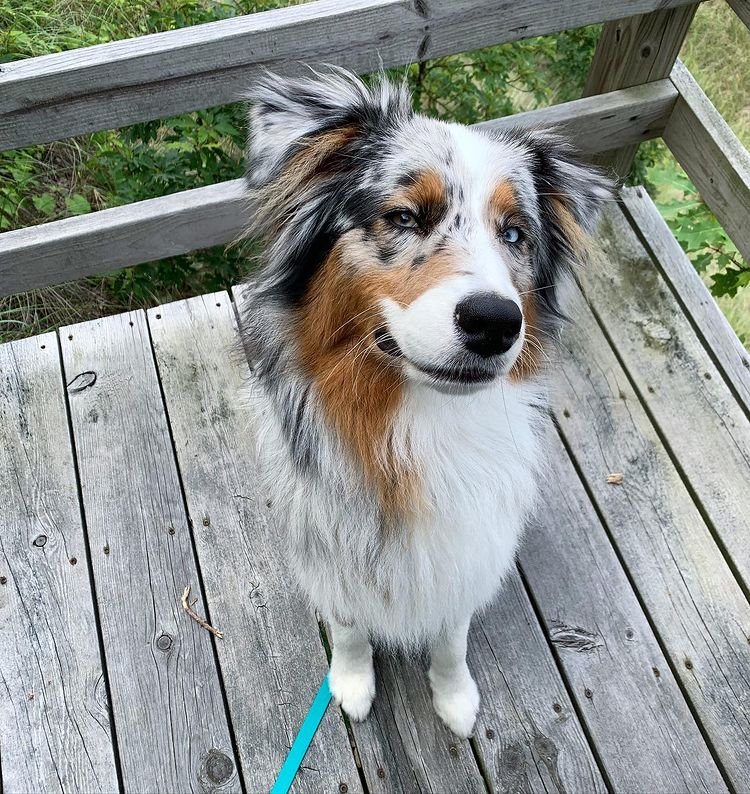
That link is why the double merle Australian Shepherd matters. Merle is dominant, so one copy shows the pattern. When two merles are bred, on average a quarter of the puppies get two copies. These double merles are often mostly white and carry a high risk of deafness, blindness and abnormally small eyes. Responsible breeders pair a merle only with a solid-colored dog, and breed clubs strongly discourage merle-to-merle litters.
Eyes
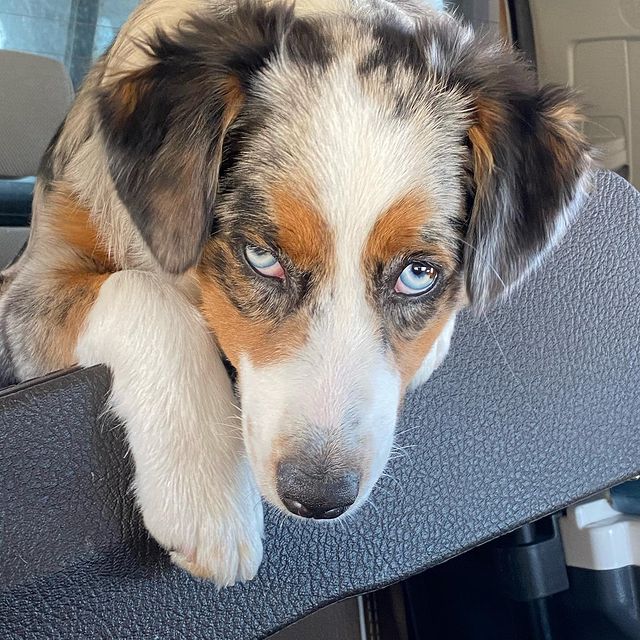
Australian Shepherd blue eyes are a breed signature, but brown, amber and any mix are equally correct. Two different colored eyes, or one marbled eye, are allowed in the show ring.
The Australian Shepherd tail
Some Aussies are born with a natural bobtail, the result of a T-box gene variant the breed shares with Corgis and a few other short-tailed breeds. Others have full tails, which the AKC standard expects to be docked to four inches or less; the FCI accepts a full tail where docking is banned. Puppies that inherit two copies of the bobtail gene usually die before birth, so breeders avoid mating two natural bobtails.
Australian Shepherd temperament at home
The Australian Shepherd personality is built around its people. Many follow their owner from room to room, hence the nickname "velcro dog." Some do the Aussie "smile", baring the front teeth in greeting while wiggling the whole back end. It looks alarming and is pure friendliness.
With strangers they tend to be polite but cool. The AKC standard says an Aussie "may be somewhat reserved in initial meetings," and that wariness makes them decent watchdogs. They will bark at arrivals and odd noises, though most are not nuisance barkers once they get enough work.
Are Australian Shepherds good family dogs?
Usually, yes, for an active family. Aussies are playful and tolerant with children they grow up with, but herding gets in the way: a running, shrieking toddler looks a lot like a stray lamb, and some Aussies will circle, bump or nip at heels. Teach the dog a solid "leave it" and a settle on a mat, and teach the kids not to run screaming around the dog. Never leave young children and any dog alone together.
Most Aussies get along with other dogs and with cats they are raised with, though some try to herd the cat. Poorly socialised or under-exercised Aussies can become anxious or snappy, and that, not true aggression, is behind most of the "are Australian Shepherds aggressive" stories. Early socialisation prevents most of it.
Australian Shepherd training and dog sports
Are Australian Shepherds smart? Very, and not always in a convenient way. An Aussie learns a new cue in a few sessions and learns just as quickly that barking at the fridge makes you open it. Start training the day the puppy comes home: name, recall, sit, down, wait at doors and a calm "settle." Keep sessions short and fun.
Use reward-based methods. Aussies are sensitive and food- and toy-motivated, and harsh corrections tend to produce a worried dog. The old advice about "showing the dog who is the boss" has been dropped by veterinary behaviourists. A predictable routine and clear house rules work better. A group puppy class adds socialisation in a controlled setting.
Dog sports for Australian Shepherds
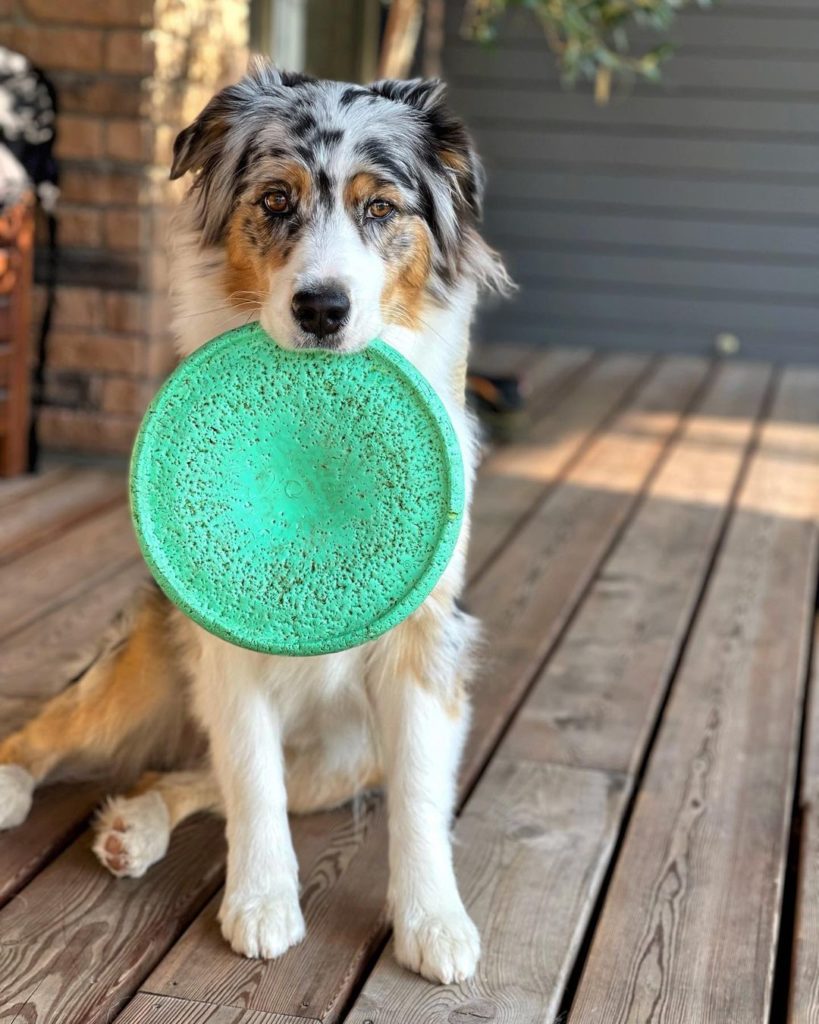
Organised sport gives a pet Aussie the kind of work it was bred for. Aussies are a common sight in:
- herding trials on sheep, ducks or cattle (ASCA and the AKC both run instinct tests for beginners);
- agility, where their speed and tight turns pay off;
- disc dog and flyball, for toy-obsessed dogs;
- obedience, rally and tracking (an Aussie named Pockets earned an AKC Rally Novice title at 15 years old, at the time a record for the oldest dog to earn an AKC title);
- dock diving, plus search and rescue and therapy work.
Australian Shepherd vs Border Collie
The two are close cousins and often compared. The Border Collie is usually lighter, more intense and more single-minded about work, and it herds with a low crouch and a hard "eye." The Aussie is a little sturdier, works stock in a more upright, loose-eyed style and is often a bit more relaxed in the house. Both need far more than a walk around the block.
Exercise: how much is enough
Plan on at least an hour of real exercise a day, and many adult Aussies are happier with two: running, fetch, hiking or a training session. Mental work counts too: twenty minutes of scent games, trick practice or a food puzzle tires an Aussie more than another lap of the park.
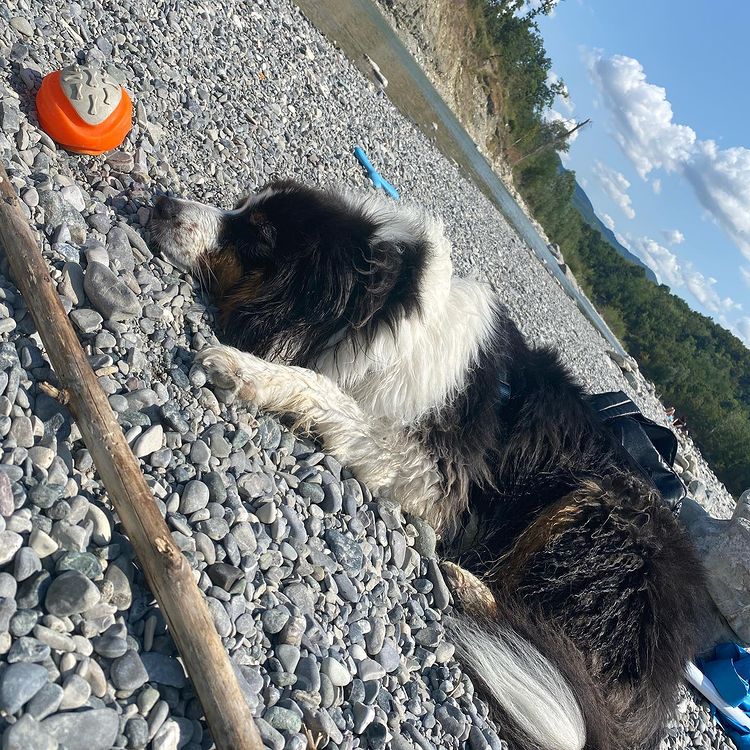
An Aussie can live in an apartment if it gets that daily outlet; a bored one invents its own job, from barking to chewing furniture. Many don't know when to stop, so in hot weather exercise early or late and call breaks yourself. Hold off on long runs and repeated jumping until the growth plates close, usually around 12 to 18 months.
Do Australian Shepherds shed? Grooming the double coat
Yes, a lot. The coat is medium length, straight to wavy, with a coarse weather-resistant outer coat over a soft undercoat. The undercoat thickens in cold climates and comes out in clumps during the spring and autumn coat blow, when shedding can last two or three weeks.
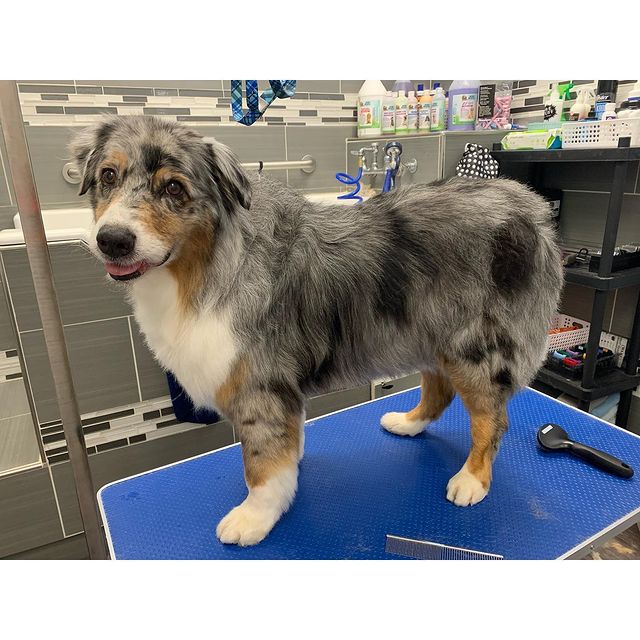
- Brush once or twice a week with a pin brush and an undercoat rake, and daily during a coat blow. Mats form first behind the ears, in the armpits and in the "pants" on the back legs.
- Bathe every month or two, or when the dog gets dirty, with a dog shampoo, and dry the undercoat thoroughly.
- Trim nails every three to four weeks. Dogs that live on grass and soft ground wear them down less.
- Check ears weekly and clean them with a vet-approved cleaner if needed. Never pour hydrogen peroxide into the ear canal.
- Brush teeth several times a week.
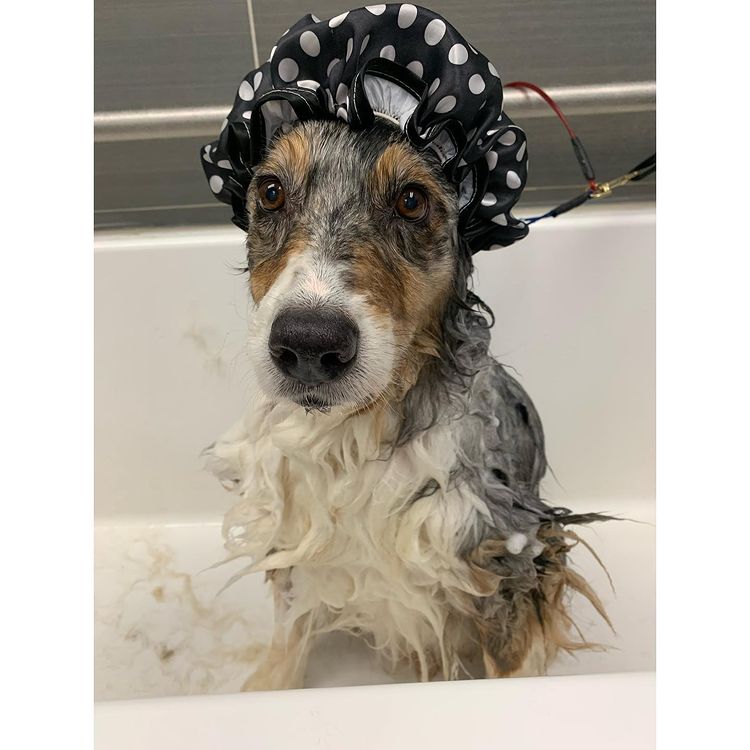
Should you shave an Australian Shepherd?
No. The double coat insulates against heat as well as cold and protects the skin from sunburn, and shaved coats often grow back patchy or not at all. A tidy Australian Shepherd haircut means trimming the feet, the hocks, around the ears and the feathering, and leaving the body coat alone.
Feeding
Feed a complete and balanced food made for the dog's life stage and keep the dog lean enough that you can feel its ribs easily; a working ranch Aussie eats far more than a pet. Keep grapes and raisins, chocolate, onions and garlic, xylitol, macadamia nuts, alcohol and cooked bones out of reach.
Australian Shepherd health problems
Aussies are generally hardy, but a few inherited problems are common enough to know about:
- MDR1 drug sensitivity. Dogs with this mutation can't pump certain drugs out of the brain. Ivermectin at high doses, loperamide (Imodium) and some sedatives and chemotherapy drugs can cause serious neurological reactions. Washington State University runs the reference test and drug list. Test your dog and tell every vet the result.
- Eye disease. Hereditary cataracts (linked to the HSF4 gene) can appear in young dogs. Collie eye anomaly and progressive retinal atrophy also occur, and an annual exam by a veterinary ophthalmologist catches most of them.
- Hip and elbow dysplasia. Hip dysplasia is less common in Aussies than in many large breeds, but breeding stock should still be X-rayed.
- Epilepsy. Idiopathic epilepsy is a recognised problem in the breed and usually starts between one and five years of age.
- Others: hypothyroidism, autoimmune disease and cancers such as hemangiosarcoma and lymphoma.
Choosing an Australian Shepherd puppy
Meet adult Aussies first, at a show or herding trial, and ask owners what a normal day looks like. Then look for a breeder who health-tests both parents and shows you the results. Ask for these (the OFA lists the current CHIC requirements for the breed):
- hip and elbow evaluations;
- an eye exam by a board-certified ophthalmologist, repeated regularly;
- DNA tests for MDR1, hereditary cataract (HSF4), PRA-prcd and Collie eye anomaly;
- a thyroid test.
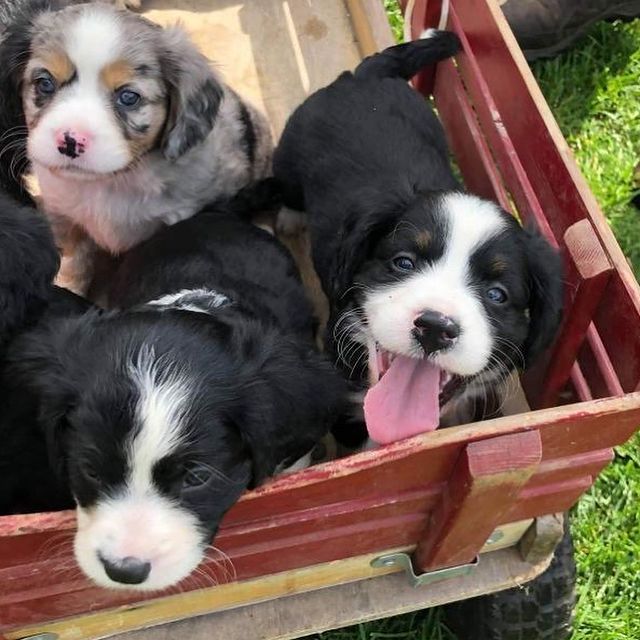
A good breeder will ask you plenty of questions and match a puppy to you instead of letting you pick on color. Working-line and show-line Aussies can differ a lot in drive, so be honest about how active you are. Look for a puppy that is curious and recovers quickly from a surprise. Rescue is another route: ASCA and regional Aussie rescues place adult dogs whose temperament is already known.
A note on "Mini Aussies": the smaller dogs sold under that name were recognised by the AKC in 2015 as a separate breed, the Miniature American Shepherd. They share the look and much of the temperament but stand roughly 13 to 18 inches tall. "Toy" and "teacup" Aussies are not recognised by any major registry.
Video about Australian Shepherd breed

Questions and answers about Australian Shepherd
The average life expectancy of a Australian Shepherd is between 12 - 15 years.
If your Australian Shepherd is pregnant, it is safe to assume that litter can have anywhere from 6 to 9 puppies.
If you purchase Australian Shepherd from a breeder it can be much more expensive than a shelter. A purebred Australian Shepherd costs between US$ 600 and US$ 1000 from a reputable breeder, but there are several advantages to doing so. First, a breeder will usually allow you to meet the parents to get a good idea about what the puppy will look like and behave. You will also see if the parents have any health problems. Breeders will also supply you with paperwork that documents your pet’s lineage.
Yes. The Australian Shepherd is one of the 20 most popular dog breeds in the USA. It ranked 14th of 202 breeds in 2025 in the American Kennel Club (AKC) registration statistics. Rose from 20th in 2013 to 14th in 2025. Best: 12th (2020–2024).
No, Australian Shepherd are not considered hypoallergenic dogs. If you are thinking about getting a Australian Shepherd and have allergies, it's important to spend time with the breed to see how you react before bringing one into your home. This can help you make an informed decision about whether a Australian Shepherd is the right pet for you, and if so, what steps you may need to take to manage any allergy symptoms.
- https://www.akc.org
- FCI standard
- Kennel club standard
- Wikipedia https://en.wikipedia.org/wiki/Australian_Shepherd
Next and previous breeds by Popularity

Yorkshire Terrier
Popularity: №13

Doberman Pinscher
Popularity: №15