Yorkshire Terrier
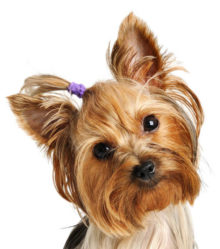
Yorkshire Terrier breed is originally from United Kingdom. Also known as Yorkie.
Breed information
| Popularity |
|
| Name | Yorkshire Terrier |
| Other names | Yorkie |
| From country | United Kingdom |
| Standards | |
| Breed groups | Toy (AKC),Companion (UKC) |
| Type | Purebred |
| Size | Tiny |
| Life span | 11 - 15 years |
| Temperament | alert,courageous,energetic,independent,intelligent,loyal,playful |
| Height female | 7-8 inches (18-20 cm) |
| Height male | 7-8 inches (18-20 cm) |
| Weight female | Up to 7 pounds (3.2 kg) |
| Weight male | Up to 7 pounds (3.2 kg) |
| Colors | black & gold,black & tan,blue & gold,blue & tan |
| Litter Size | 4 - 6 puppies |
| Puppy Price | Average $800 - $1500 USD |
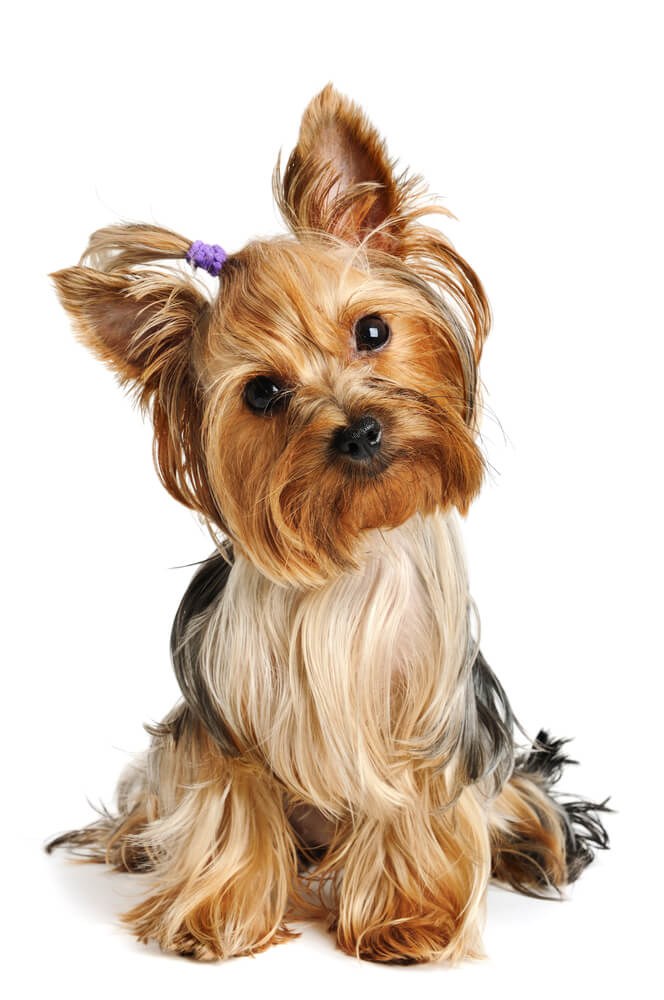
Yorkshire Terrier breed image
Yorkshire Terrier Pros and Cons
There are 3 pros and 3 cons of owning Yorkshire Terrier.
| Pros 👍 | Cons 👎 |
|---|---|
| Doesn't shed much | Kids unfriendly |
| Normally doesn't have problems with health | Difficult to groom |
| Hypoallergenic | Needs a lot of exercises |
Breed Characteristics
| Sensitivity Level |
Low-sensitive
High-sensitive
|
High-sensitivity dogs can be deeply affected by their owner's actions. If you shout loudly at the dog, ignore it, or if your child pulls its tail, it may take offense. On the other hand, low-sensitivity dogs, often referred to as 'tolerant' dogs, handle these situations more easily. If you're an emotional person, have a busy lifestyle, sometimes neglect your dog, or have young children, we don't recommend getting a high-sensitivity dog. |
|
| Kid-Friendly |
No-Kid-Friendly
Kid-Friendly
|
Kid-friendly dogs are highly tolerant of children's behavior, including hugs and playful "games" like attempting to saddle them. They typically interact kindly and patiently with kids, making them great family pets. Not Kid-Friendly Dogs - Dogs in this category do not tolerate such behavior from children and may react negatively or even aggressively. Be cautious about bringing a not kid-friendly dog into a family environment. |
|
| Dog Friendly |
Low-friendly
High-Friendly
|
Dog-friendly characteristics vary widely, ranging from low-friendly to high-friendly. It's important to note that a dog's level of friendliness depends on several factors, and breed is just one of them. Dogs with high friendliness tend to be sociable and enjoy interacting with other dogs. They may happily play with other canines or simply remain calm and relaxed when in the company of other dogs. Conversely, dogs with lower levels of friendliness may exhibit different behaviors. They might be more prone to barking, trying to engage in fights with other dogs, or even attempting to run away from unfamiliar dogs or situations. Keep in mind that a dog's friendliness is influenced by their individual personality, upbringing, and experiences. So, it's essential to consider these factors when assessing your furry friend's social behavior. |
|
| Friendly Toward Strangers |
Not-friendly
Everyone Is My Best Friend
|
It's important to understand that a dog's behavior towards strangers is influenced by various factors, with breed being just one of them. A dog that is friendly toward strangers will typically exhibit pleasant behavior when your friends or visitors come to your home. They won't display aggression or attempt to attack them. Instead, they will likely be welcoming and sociable. On the other hand, some dogs may be naturally shy or even fearful of strangers. However, it's crucial to note that a dog's socialization plays a significant role in their behavior. Proper socialization lessons can help any dog become more welcoming to strangers, regardless of their breed. That said, if you happen to choose a breed known for its high stranger-friendly rating but don't invest time in training and socialization, the dog may still exhibit unfriendly behavior toward your visitors. Remember, a dog's behavior is a product of both their breed tendencies and their upbringing. |
|
| Amount Of Shedding |
No Shedding
Hair Everywhere
|
|
What's crucial to note is that the extent of shedding can vary from one breed to another. Some dogs shed consistently throughout the year, while others may have specific seasonal shedding patterns. There are also breeds that shed minimally, and in some cases, almost not at all. When choosing a dog, it's essential to consider your personal preferences and standards regarding shedding. Your choice should align with how much you're willing to handle in terms of grooming and cleaning to keep your home and clothes free from excessive dog hair. |
|
| Easy To Groom |
Hard
Easy
|
|
Some breeds are low-maintenance and can be brushed quickly and easily. Others may need regular clipping, grooming, and bathing to keep them looking their best. When choosing a dog, it's important to assess how much time and money you're willing to invest in their grooming needs. Your decision should align with your preferences and your commitment to providing the necessary care for your furry friend. |
|
| General Health |
Need more attention to health
Healthy as an ox
|
|
It's important to be aware that some dogs may face health challenges due to irresponsible breeding practices. One example of such health issues is hip dysplasia, which is a genetic problem. However, it's essential to understand that not every dog of a specific breed will develop these health issues, although they may be more prone to them. When adopting a puppy, it's a good practice to gather information about any genetic illnesses associated with the breed. For more detailed information, you may also want to consult with a shelter or rescue organization, as they can provide insights into the physical health of the puppy's parents or siblings. |
|
| Easy To Train |
Self-Willed
Eager to Please
|
|
It's worth noting that some dog breeds are more trainable than others. For instance, certain breeds may quickly grasp and establish associations between words like 'stay,' corresponding actions (such as staying in place), and the resulting rewards. On the other hand, some breeds may require more time and attention during training. Dogs are highly intelligent animals, but they often like to understand what's in it for them when they follow your commands. This is where games and rewards can be valuable tools in training and motivating them. |
|
| Intelligence |
Low
High
|
|
Different dog breeds excel in specific tasks and exhibit varying levels of intelligence, concentration, and quick decision-making abilities. For instance, breeds bred for their intelligence, like Border Collies, may excel in activities such as herding livestock. These dogs require more mental stimulation to thrive compared to breeds designed for physical endurance and running. Understanding your dog's specific needs is essential to ensure they are mentally engaged and don't engage in unwanted behaviors like chewing and digging. To meet these needs, consider interactive toys and activities, such as obedience training for dogs in need of mental engagement, or search and rescue activities for those with high activity levels and keen senses. |
|
| Tendency To Bark Or Howl |
Only To Alert
Avid singer
|
|
It's important to understand that vocalization varies between dog breeds. Some dogs are naturally more vocal, and they can bark and howl at different pitches. For instance, consider the hound, known for its distinctive barking and howling. You'll need to decide if the sound of their vocalizations might become bothersome or if you find it somewhat musical. Additionally, if your chosen breed has a history of hunting, they might constantly chase and howl at nearby wildlife. If you're looking for a watchdog and your dog is alert, it may bark at everyone it encounters. These factors are essential to consider when selecting a dog breed, especially if you have neighbors or are subject to any noise restrictions. |
|
| Energy Level |
Couch Potato
High Energy
|
|
A dog's energy level is often influenced by their breeding, as some breeds were designed for specific tasks like herding livestock or retrieving game for hunters. Dogs with high energy levels will require plenty of interaction and exercise. They tend to be more active and enjoy activities such as playing, running, tumbling, and exploring new smells and sights. On the other hand, some breeds are low-energy and prefer lounging on the couch with you, taking naps, and enjoying Netflix marathons. When choosing a dog breed, it's essential to consider your own activity level and lifestyle. Select a breed that aligns with your preferences and can comfortably fit into your daily routine. |
|
| Exercise Needs |
Low
Need a lot
|
|
Different dog breeds have varying requirements when it comes to physical activity. Some breeds may be content with a leisurely stroll in the evening, while others might crave several vigorous laps around the block. Their exercise needs are often linked to their original purposes, such as hunting or herding, which influence their energy levels. Dogs with high energy levels that don't receive adequate exercise may be prone to weight gain and may engage in behaviors like digging, chewing, and excessive barking. High-energy dogs tend to thrive when paired with individuals who are active, enjoy the outdoors, or have an interest in training their dog for competitions. |
|
| Potential For Playfulness |
Only When You Want To Play
Non-Stop
|
|
Dog breeds exhibit a wide range of personalities, and this includes their inclination for play. Some breeds are consistently playful and seem to stay in a perpetual puppy state of mind. In contrast, other breeds tend to be more serious and enjoy their moments of relaxation. When choosing a dog, it's important to consider whether the idea of having a playful companion excites you or if you prefer a more relaxed and laid-back dog. Additionally, factors such as the presence of children or other pets in your household should be taken into account. Another option to explore is adopting an older dog, which might be less demanding but still enjoys interacting and playing, providing a balance between playfulness and a calmer demeanor. |
|
What were Yorkies bred for?
Yorkies were bred to catch rats. The silky lapdog of Victorian drawing rooms started out in the textile mills and coal pits of northern England, where vermin got into grain stores, bales of cloth and mine shafts. The American Kennel Club sums it up in one line: Yorkies "earned their living as ratters in mines and mills long before they became the beribboned lapdogs of Victorian ladies" (AKC). That past explains most of the modern Yorkie temperament. The dog is tiny, but it thinks like a working terrier.
Yorkshire Terrier origin and history
The breed took shape in Yorkshire and neighbouring Lancashire in the mid-1800s. Workers moving south from Scotland to find jobs in the cotton and wool mills brought their small terriers with them. None of these dogs exist as breeds today: the Clydesdale and Paisley terriers, both small long-coated relatives of the Skye Terrier, and assorted rough-coated "Scotch" terriers. Local breeders crossed them with black-and-tan terriers, and some writers of the time believed Maltese blood was added for coat texture. Nobody kept proper records, so the exact recipe is unknown.
Early dog shows lumped these dogs into classes such as "Rough and Broken-coated, Broken-haired Scotch and Yorkshire Terriers". Over the 1870s the name Yorkshire Terrier won out because, as one breeder put it, the dogs had been "improved so much in Yorkshire" (Wikipedia, citing 19th-century sources).
Huddersfield Ben, the father of the breed
Most of the breed's foundation stock came from Huddersfield Ben, who was born around 1865 in Huddersfield and was owned by Mary Ann Foster of Bradford. Ben won 74 prizes at shows and in ratting contests. He weighed somewhere between 9 and 12 pounds, well above today's limit, yet he kept siring puppies small enough for the under-7-lb show classes. In 1871, at the age of six, he was run over by a carriage. His stuffed body was displayed for decades and went missing around the Second World War (Huddersfield Ben).
Crossing to America
Yorkies reached North America in the 1870s, and the AKC registered its first one in 1885. Interest dropped in the 1940s and then came back, thanks largely to a war dog (more on her below). By 2006 the Yorkshire Terrier had climbed to second place in the AKC registration rankings, behind only the Labrador. It still sits in the top 15.
Yorkie temperament: a terrier in a small body
The Kennel Club's standard asks for a dog with a "carriage very upright conveying an important air", and most owners would agree that Yorkies have a high opinion of themselves. Day to day, the Yorkie personality tends to show up in a few ways:
- A Yorkie will often square up to a dog ten times its size. Keep it leashed around unknown dogs, because a single bite from a big dog can kill it.
- Yorkies are alert and vocal. Ratters were expected to react to every scratch and rustle. That is why Yorkies bark so much at doorbells, footsteps and delivery vans. Teaching a "quiet" cue early helps more than scolding later.
- Stanley Coren ranked the Yorkie 27th in The Intelligence of Dogs, which puts it in the above-average group. Yorkies learn quickly but get bored with repetition. Short sessions with food rewards work best.
- Most Yorkies pick one favourite human and follow them from room to room.
House training is the most common complaint. A small bladder and a dislike of wet grass make for a slow learner. A fixed schedule, plenty of praise and, for some owners, an indoor litter pad are the usual fixes. Small size also tempts people to carry the dog everywhere and let it get away with growling. Yorkies raised that way tend to turn snappy, so give yours the same rules you would give a bigger dog.
Yorkshire Terrier health problems to know about
Yorkies often live well into their teens, but the breed has a handful of known weak spots. Most of them come with being very small.
- Collapsed trachea: the cartilage rings of the windpipe weaken and flatten. The classic sign is a dry cough that sounds like a goose honk, which gets worse with excitement or when the dog pulls on its lead. Walk a Yorkie on a harness, not a collar (VCA Animal Hospitals).
- Liver shunt (portosystemic shunt): a birth defect in which blood bypasses the liver. Yorkies are one of the breeds where it shows up most often. Warning signs in a puppy include slow growth, disorientation or seizures after meals, and drooling. Many cases can be fixed with surgery (VCA Animal Hospitals).
- Kneecap luxation: the kneecap slips out of its groove, and the dog skips or holds up a back leg for a few strides. Ask a breeder for the parents' patella results (OFA).
- Low blood sugar in puppies: a toy puppy has almost no reserves. If it skips a meal, gets chilled or is stressed, it can go limp, wobbly or glassy-eyed within hours. Feed small puppies three or four times a day and keep honey or a glucose gel at home. Rub a little on the gums while you call the vet.
- Teeth: a full set of adult teeth has to fit in a very small jaw. Baby teeth often fail to fall out, and tartar builds up early. Daily brushing and yearly dental checks save teeth.
- Tummy trouble and pancreatitis: many Yorkies have sensitive stomachs, and fatty table scraps are a known trigger for pancreatitis.
- Anaesthesia: a two-kilo dog loses body heat fast and needs careful dosing. Ask your vet how they monitor tiny patients before any procedure.
The Yorkshire Terrier Club of America lists recommended health tests for breeding dogs on its site (YTCA). A breeder who can't show you any results for the parents is a red flag.
Yorkie grooming: shedding, haircuts and coat care
Do Yorkies shed? Very little. The coat is fine, silky hair that keeps growing, like human hair, and there is no undercoat. Loose hairs tangle into the coat instead of landing on your sofa. That makes the breed easy to live with if you have mild allergies, and hard work for the brush.
Yorkie puppies are born black and tan. The black slowly clears to the steel blue the breed is known for, and the tan lightens to gold. The final colour can take three years or more to settle, so a black puppy is perfectly normal.
Show coat or puppy cut?
A floor-length show coat needs daily brushing. Exhibitors oil the hair lightly and fold it into paper or plastic wraps so the ends don't break, then wash the oil out regularly. Most pet owners don't bother and keep the dog in one of the popular Yorkie haircuts instead:
- Puppy cut: the whole body is trimmed to one short length, about an inch. It is the easiest to maintain.
- Teddy bear cut: like the puppy cut, but the face is left fuller and rounded for a softer look.
- Schnauzer-style cut: a short body with longer "skirts" and a beard.
Short cuts need a groomer every four to eight weeks and a quick brush a few times a week. Whatever the style, keep the hair around the eyes trimmed or tied up in the traditional topknot, and check the bottom and the paw pads for mats.
Without an undercoat, a Yorkie feels the cold quickly, especially once the coat is clipped short. A sweater or a light waterproof coat on cold, wet days is a practical need for this breed.
What about "teacup" Yorkies?
No kennel club recognises a teacup, micro or toy-sized Yorkie. The AKC and the Kennel Club standards set a single upper limit of 7 pounds (3.2 kg) and no lower size class (The Kennel Club). "Teacup" is a sales label for unusually small dogs, often bred from the runts of litters. These dogs are more prone to low blood sugar, liver shunts, collapsed tracheas and broken bones, and they can be badly hurt by a jump off the sofa.
The breed does hold the record at the extreme end. Sylvia, a Yorkie owned by Arthur Marples of Blackburn, England, is still the smallest dog on record. When she died in 1945, at about two years old, she stood 2.5 inches at the shoulder and weighed 4 ounces (Guinness World Records).
Yorkie facts: Smoky the war dog and other famous Yorkies
In February 1944 an American soldier found a small Yorkie in an abandoned foxhole in the New Guinea jungle. Corporal William Wynne bought her for two Australian pounds and named her Smoky. She weighed about 4 pounds and spent the rest of the war with him, riding along on combat flights and learning tricks to entertain the troops.
Her best-known moment came at the Lingayen Gulf airfield in the Philippines. Signal Corps engineers needed to run a telegraph wire through a 70-foot pipe only 8 inches across, partly filled with soil. Smoky crawled through with a string tied to her collar, and the wire followed. That saved the men from digging up the airstrip. After the war she visited hospitals with Wynne, and she is often called the first therapy dog (Smoky (war dog)). Her fame is credited with reviving interest in the breed in America.
A few more Yorkie facts worth knowing:
- In 1997, Champion Ozmilion Mystification became the first Yorkie to win Best in Show at Crufts.
- Pasha, a Yorkie belonging to Tricia Nixon, lived in the White House during Richard Nixon's presidency.
- The Yorkie gave rise to the Australian Silky Terrier and is a parent of popular crosses such as the Morkie (with the Maltese) and the Yorkipoo (with the Poodle).
Standards and further reading: AKC breed page, The Kennel Club breed standard, Yorkshire Terrier Club of America.
Video about Yorkshire Terrier breed
Questions and answers about Yorkshire Terrier
if you have no experience in dog training and you aren't going to train a dog with an expert, then no. Yes, in case Yorkshire Terrier is properly raised, trained, and well-socialized. It can be great with children if raised with them early on.
The average life expectancy of a Yorkshire Terrier is between 11 - 15 years.
If your Yorkshire Terrier is pregnant, it is safe to assume that litter can have anywhere from 4 to 6 puppies.
If you purchase Yorkshire Terrier from a breeder it can be much more expensive than a shelter. A purebred Yorkshire Terrier costs between US$ 800 and US$ 1500 from a reputable breeder, but there are several advantages to doing so. First, a breeder will usually allow you to meet the parents to get a good idea about what the puppy will look like and behave. You will also see if the parents have any health problems. Breeders will also supply you with paperwork that documents your pet’s lineage.
Yes, we can say that Yorkshire Terrier is popular in America. They are in top 20 the most popular purebred dog in USA. Yorkshire Terrier have got #13 rank in 2025, #11 in 2024, #13 in 2023, #13 in 2022 and #13 in 2021 by American Kennel Club (AKC).
Yes, Yorkshire Terrier dogs are considered hypoallergenic. They have hair instead of fur, which means they do not shed as much as other breeds and produce less dander, the primary cause of pet allergies. However, it's worth noting that no dog breed is completely hypoallergenic, and people with severe allergies may still react to Yorkshire Terrier. If you are allergic to dogs, it's always a good idea to spend time with a Yorkshire Terrier before bringing one home to see if you have any allergic reactions.
- https://www.akc.org
- FCI standard
- Kennel club standard
- Wikipedia https://en.wikipedia.org/wiki/Yorkshire_Terrier
Next and previous breeds by Popularity

Cavalier King Charles Spaniel
Popularity: №12

Australian Shepherd
Popularity: №14